Key Takeaways From the 2026 GovCon Executive Leadership Summit
Co-authored with Pat Host and Gabriella DeCesare

The 2026 GovCon Executive Leadership Summit was a first for Potomac Officers Club: the maiden voyage for our all-industry event, where we brought together an elite group of government services leaders to speak to the community, share strategies and see where conversations between high-achieving, ambitious executives would end up.
Potomac Officers Club is the nation’s leading GovCon events and networking organization and was thrilled to add this annual event to its portfolio in 2026. While the focus was still very much on how to serve the shared federal customer, the esteemed participants at the Feb. 26 Leadership Summit took stock of where the industry stands over a year into the new administration (which has brought many changes for GovCons) and, across keynote speeches and breakout panels, revealed how they’re positioning themselves for growth and success.
Join POC for our next major GovCon meeting of the minds: the 2026 Artificial Intelligence Summit. At the March 18 event, chief AI officers from the Department of War, FBI, Department of State and U.S. Space Force will dialogue with representatives from top contractors like SAIC, MANTECH, LMI, SOSi, Empower AI and more. Don’t miss this prime opportunity to meet federal decision-makers and survey the state of AI in government. Register now!
What Were the Major Takeaways From the 2026 GovCon Executive Leadership Summit?
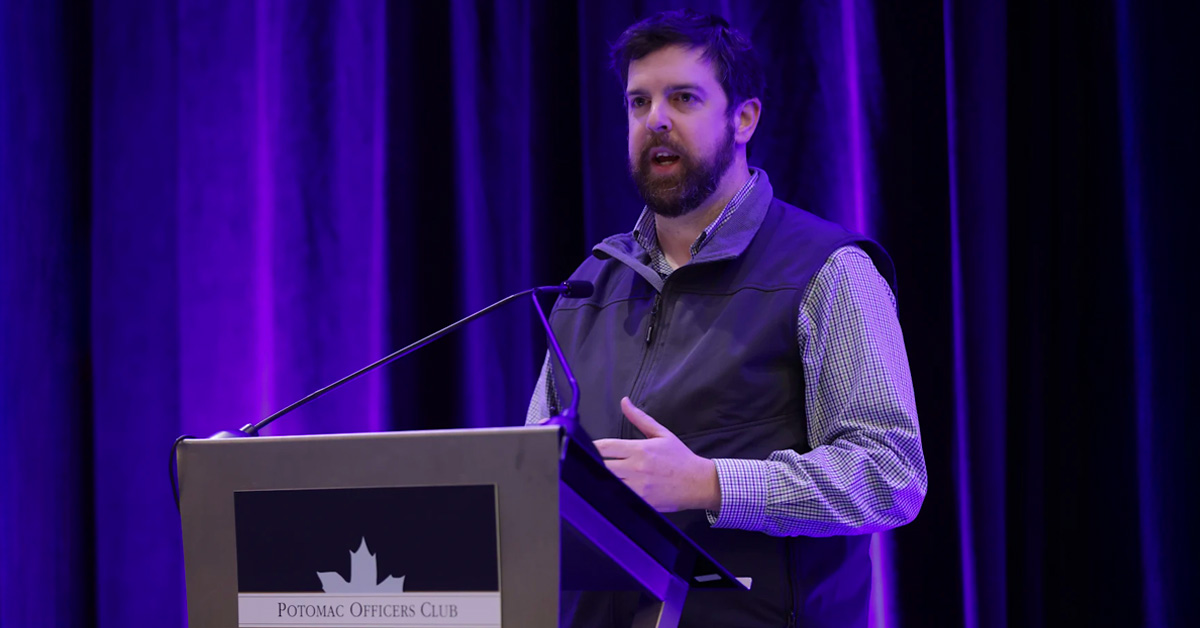
Acquisition Reforms Are Having a Real Impact
Acquisition reform is a familiar theme in government contracting, but speakers at the 2026 GovCon Executive Leadership Summit suggested the latest efforts may be producing tangible change.
Greg Little, senior counselor at Palantir Technologies, said during his mid-morning keynote that the War Department’s push to modernize procurement under Secretary of War Pete Hegseth’s Acquisition Transformation Initiative is already making a “wild difference.”
Executives on the Leading the Shift: CEOs at the Crossroads of Innovation and Integration panel echoed that sentiment, pointing to a contracting landscape that is shifting faster than many companies expected.
Julian Setian, CEO of SOSi and a Wash100 winner, said government priorities and spending changes have created “tremendous whiplash” for contractors in recent years, but the latest reforms may be reshaping the competitive environment more fundamentally.
“I think the game has fundamentally changed,” Setian said. “I think FAR 2.0 has completely reshuffled the deck.”
Setian noted agencies are increasingly moving away from traditional FAR Part 15 procurements toward FAR Part 12 commercial acquisitions, OTAs and scalable proof-of-concept pathways tied to vehicles such as Best-in-Class contracts.
At the same time, he said the number of commoditized contract vehicles is shrinking, which could make it harder for mid-tier companies to compete independently.
“There are far fewer opportunities for mid-tier companies to pursue with primes,” Setian said. As a result, many firms may face a choice between being acquired by large integrators or partnering with emerging nontraditional technology providers.
Differentiation Is Key to Winning Contracts in a Changing Market
GovCon leaders say the companies that continue winning federal business in the years ahead will be those that clearly differentiate themselves, especially as agencies have reshaped priorities and budgets in the new administration.
During the Leading the Shift panel, executives emphasized that the GovCon landscape is undergoing significant change, forcing companies to rethink where they invest and how they present their value to government customers. Rather than competing broadly across markets, panelists said successful contractors are sharpening their value propositions and aligning them tightly with mission needs.
One theme that emerged repeatedly across topics was the importance of understanding the government’s mission at a deeper level. As Julian Setian explained, “mission intimacy is more important than customer intimacy,” underscoring the idea that contractors must look beyond traditional client relationships and instead immerse themselves in the operational challenges agencies are trying to solve.
That shift in perspective can also open new opportunities. Wash100 winner and CGI Federal President Stephanie Mango noted that differentiation sometimes means bringing established expertise into new environments. Entering “white space,” she said, involves applying proven capabilities to different agencies or mission areas where those solutions can deliver value, rather than diversifying capabilities.
For some companies, differentiation means narrowing their focus rather than expanding it. During the New at the Top session, LMI CEO Josh Wilson, another Wash100 honoree, described how organizations must concentrate on the domains that matter most to them and their customers. In a rapidly evolving technology environment, contractors can no longer treat broad categories like software or hardware as monolithic markets. Instead, they need greater specificity and depth in the areas where they choose to compete.
Anduril Industries Senior Vice President of Government Relations Megan Milam explained that differentiation also requires companies to think about their role within the broader GovCon ecosystem. Rather than attempting to do everything, organizations should identify where they uniquely contribute to solving government problems.
“What can you provide that is unique and different?” Milam fielded during an acquisition-focused panel, describing the question companies should ask as they define their place in the market.
Taken together, the executives’ perspectives reflect a broader shift in federal contracting strategy. As agencies refine their priorities and competition intensifies, companies that clearly define their strengths, and demonstrate how those strengths directly support mission outcomes, will be best positioned to stand out.
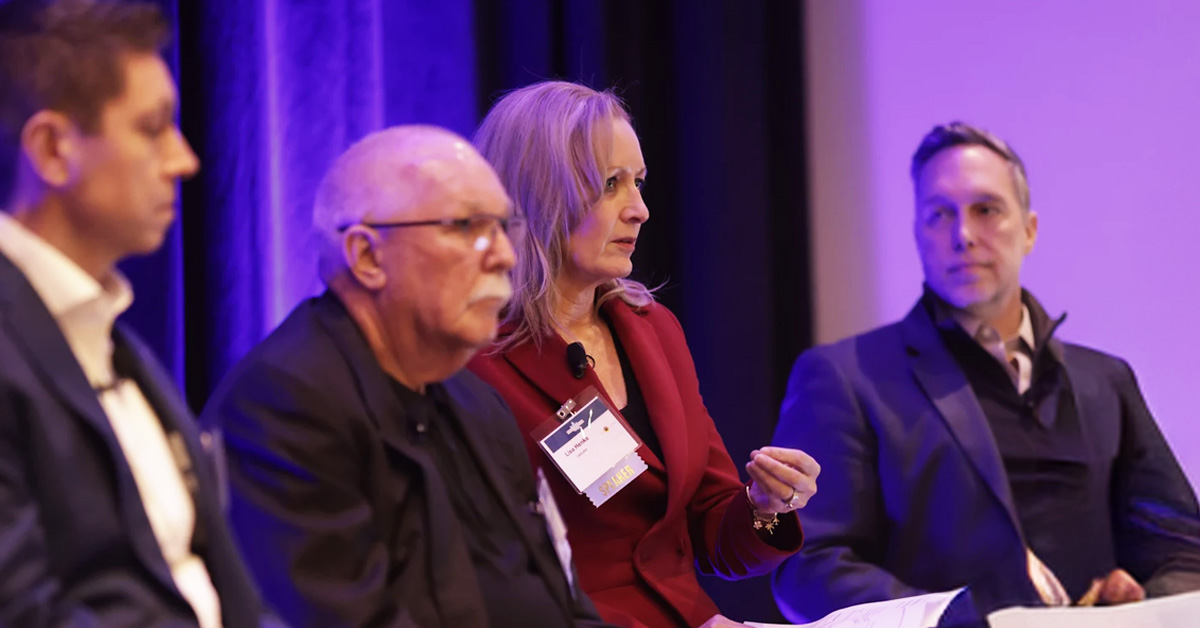
Definitions of ‘Commercial’ Tech & Services in GovCon Are Not Fixed
Another hot topic of conversation was how to best define commercial services and tech. The Trump administration has made procuring commercially-available technologies instead of custom applications designed for niche use as a priority across the federal government. The concern is that there is no standard definition for commercial technology and there’s a variety of mixed messaging coming from the federal government.
One panelist had a simple explanation.
“It doesn’t matter what Viasat thinks is commercial, it’s what the Department of War thinks is commercial,” said Richard VanderMeulen, Viasat vice president for space and satellite broadband. “The best example is Space Command’s [2024 Commercial] Integration Strategy…it basically commercial refers to goods and services provided by the private sector, where the private sector bears the investment risk and the responsibility for the activity…The other thing…if there isn’t commercial demand to justify the business case, it’s not commercial.”
Another executive suggested defining “commercial” based on how a company is incentivized to achieve an outcome.
“I worked at Lockheed Martin and Northrop Grumman, and I respect their work in building out their systems, but the prime model is built on incentives to reducing risk, achieving schedule, and compliance and delivery,” said Lisa Henke, LeoLabs vice president of sensor and defense mission systems. “As compared to the commercial model, where my company has invested in achieving mission outcome. It’s a switch, and I think Golden Dome needs both [types of companies].”
The complexities of government needs and priorities will be discussed in depth at POC’s next event: the 2026 Artificial Intelligence Summit on March 18. Make sure your company is represented.
AI Remains a Central Force Shaping the Industry
Artificial intelligence remained a defining theme throughout the summit, with multiple keynote sessions focused on the technology’s growing role in both government operations and defense strategy.
Dedicated AI keynotes were delivered by Wash100 Award winner Joseph Larson, vice president and head of government at OpenAI; Thiyagu Ramasamy, head of public sector at Anthropic; and Keith Strier, senior vice president of global AI markets at AMD.
Little also devoted part of his keynote to the national security implications of AI, framing the technology as a key factor in enabling faster decision-making than geopolitical adversaries.
One of his presentation slides asked a central question: “How can AI be used to enable better and faster decisions than our adversaries?”
Little demonstrated an AI-enabled kill chain software platform developed by Palantir, which identifies potential targets and supports real-time collaboration among allied users, including built-in translation capabilities.
At the same time, he emphasized that software and AI must ultimately support a broader effort to “reindustrialize America” and strengthen the nation’s manufacturing base.
While many technology advocates describe AI and autonomy as a “silver bullet” for modern warfare, Little argued that physical production capacity still determines battlefield outcomes.
Even with superior decision-making capabilities, he said, nations still need the ability to produce and sustain munitions, drones, aircraft and other equipment required for modern conflict.
On the Leading the Shift panel, QinetiQ US CEO and Wash100 winner Tom Vecchiolla said his company is applying AI both to enhance internal delivery and to strengthen mission solutions, particularly in sensor systems where AI can improve data analysis and operational effectiveness.
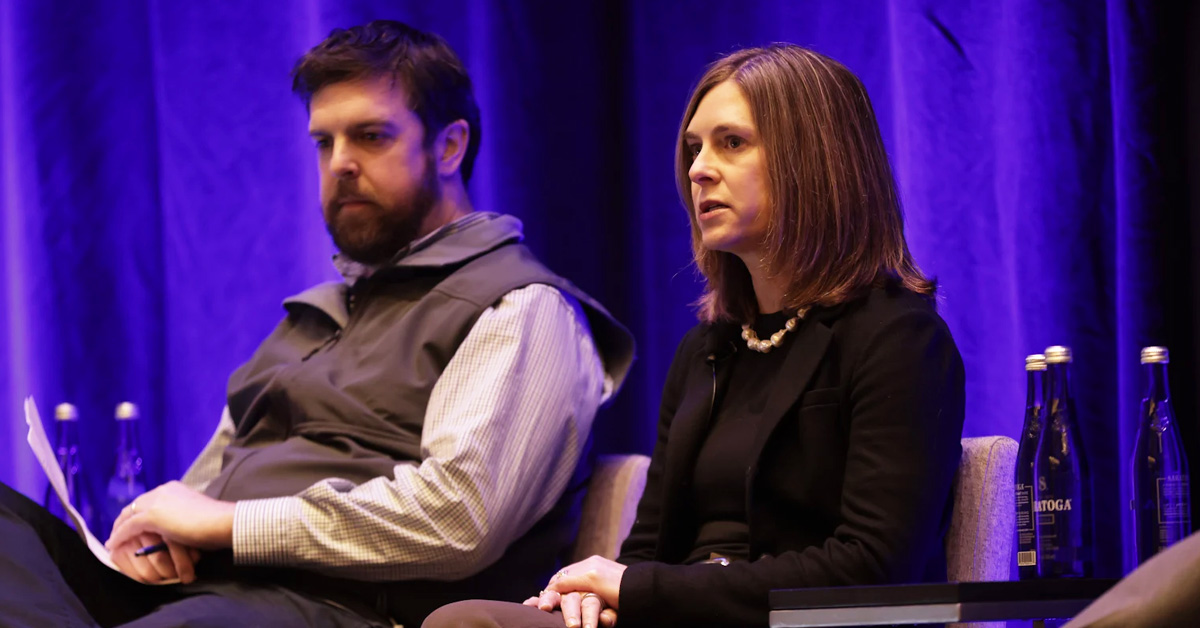
“I think FAR 2.0 has completely reshuffled the deck.” — SOSi CEO Julian Setian
A Shift to Product Mindset, Building Solutions Before Contract Awards
Government contractors are increasingly shifting their investment strategies toward building and commercializing solutions before contracts are awarded, reflecting a growing expectation from federal customers that industry arrive with capabilities ready to deploy.
Executives said the traditional GovCon model of waiting for a solicitation before developing a solution is quickly becoming outdated. Instead, companies must invest earlier in product development and production capacity to keep pace with government demand for rapid, scalable delivery. The goal is to bring more mature, ready-to-field capabilities to government customers rather than starting from scratch once a contract is secured.
During an acquisition reform panel, Megan Milam of Anduril Industries said this approach reflects a broader effort to deliver innovation faster and more effectively to national security missions.
Her organization has focused on operating more like a defense product company than a traditional contractor, emphasizing the importance of delivering “capabilities at the speed of relevance.” In a rapidly evolving threat environment, she said, solutions must be ready when the mission demands them, not months or years later.
Kratos Vice President Otis Winkler noted that federal agencies, particularly within the defense community, are increasingly prioritizing speed and scale. In many cases, government customers are willing to accept solutions that are not perfect if they can be delivered quickly and expanded to meet operational needs.
“They’ll take an 80 percent solution if they can get it fast,” Winkler, who leads corporate development and national security programs, said, explaining that this dynamic is fundamentally reshaping the GovCon development cycle.
That shift has major implications for how companies approach prototyping and production. Rather than treating them as separate phases, Winkler said contractors should build production considerations into early development so they are ready to scale when a contract is awarded.
Palantir’s Greg Little, who sat on the acquisition reform panel as well as contributing a keynote, added that the changing environment is also challenging the traditional consulting model. Generalist consulting firms, he said, are becoming less relevant as government customers seek providers with a product-oriented mindset — companies that can connect concrete solutions directly to mission problems.
General Atomics Aeronautical Systems’ Mike Shortsleeve echoed his fellow panelists, stating that the companies winning programs today are those willing to invest well ahead of the acquisition process. Organizations across the sector are putting significant resources into building products before solicitations are released in order to move quickly once opportunities emerge.
“If you wait for the contract, you’re already too late,” Shortsleeve, GAAS VP of strategy business development, said, noting that the firms that succeed will be those prepared to deliver a near-complete solution from the start.
Overall, panelists said the shift toward upfront product investment represents a fundamental evolution in the GovCon business model. Contractors that build scalable solutions in advance and can rapidly transition them into production will be best positioned to meet government expectations and capture future opportunities.
How Companies Should Think About Collaborations
One theme throughout the day was how companies should think about collaborations. While typically competitors, government contracting firms regularly partner with each other to fill capability gaps and win contracts they might not otherwise win on their own.
“All of us collaborate. We delivered our 1,000th infrared seeker to Lockheed Martin,” said Peder Jungck, BAE Systems chief innovation and strategy officer. “The pace of change, that amount of collaboration, that type of deal took a long time for organizations to figure out how to work together and trust each other. How do we trust one another to collaborate as a set of organizations that is less defined?”
Another executive described how he approaches partnerships, what he seeks out of potential teammates and how to maximize the best from both firms.
“What we’re really about is the right parts that we buy, the right partners and the right customers,” said Kevin McLaughlin, C Speed CEO. “One example, you might have noticed our partnership with BigBear.ai. We have common goals. We want to leverage their capability to put their AI at the edge of our radar architecture. They want a partner for the architecture of those radars. We’re doing this as a partnership because it would be difficult for us to do what the other does. That’s how we think about partnerships.”
Successfully Selling to the Government Requires Knowing the Customer
One common thread during a day packed full of actionable business intelligence was how to sell to the government. One panelist suggested that nothing beats better understanding the government customer and once you achieve that, sales will follow.
“The biggest takeaway is that the government is scared. Scared to innovate and scared to change. It has used systems for many years. The FBI has systems that are still running AS/400 [computers]. It doesn’t make sense,” said Robert Turner, Strider Technologies vice president of government. “I think the best way to approach the customer to help modernize is understand where they are compared to where they want to be. Identify what the differences are so the customer can see ‘yes, this is the change, but you have a plan to get us there.’ That is my biggest piece of advice going forward.”
Contractors Want to Rethink the Procurement Model
Beyond responding to acquisition reform, some industry leaders said the government contracting ecosystem itself may need a more fundamental redesign.
During the Leading the Shift panel, Stephanie Mango said she hopes procurement could eventually move away from the traditional proposal-driven process and toward a more collaborative, solution-focused model.
“My dream is that someday it’s all done through bakeoffs and us bringing things to the table,” Mango, a Wash100 honoree, said. “That we would never write another proposal that nobody likes reading.”
Mango argued that written proposals are becoming less meaningful as generative AI makes it easier to produce large volumes of documentation. Instead, she said evaluation should focus on the people, technologies and capabilities companies bring to the table.
She contrasted the current federal approach with commercial procurement practices, where customers and potential providers tend to collaborate more closely as opportunities mature.
“In the government, it’s always worked differently. The closer you get to a procurement, the less you talk,” Mango said, adding that the dynamic has often limited innovation.
Panel moderator and fellow Wash100 winner Kevin Plexico, senior vice president at Deltek, said procurement processes can sometimes constrain creativity once opportunities enter formal acquisition channels.
“It seems like once it gets to the procurement shop, all creativity and innovation shuts down because they have a process they’re going to run,” Plexico said.
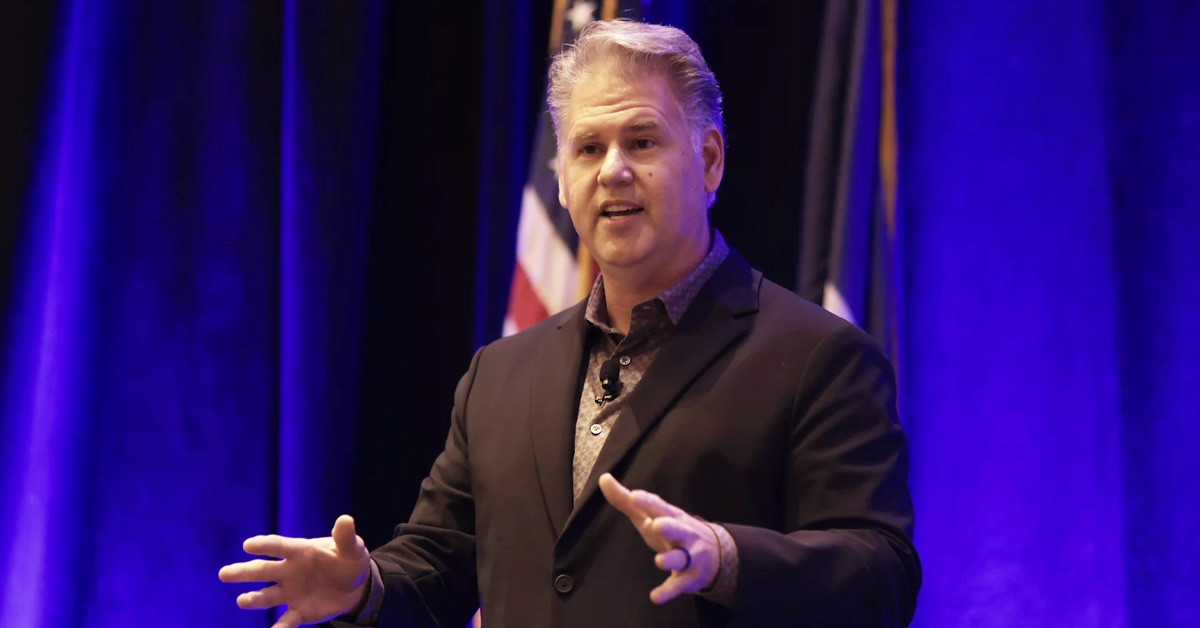
“The biggest takeaway is that the government is scared. Scared to innovate and scared to change.” — Strider Technologies’ Robert Turner
Building Trust & Empowering Employees Fuels Mission Success
At the summit, participants said successful transformation efforts start not with strategy or technology, but with people. Executives emphasized that fostering trust, listening to employees and aligning teams around a shared mission are essential to driving meaningful change across their organizations.
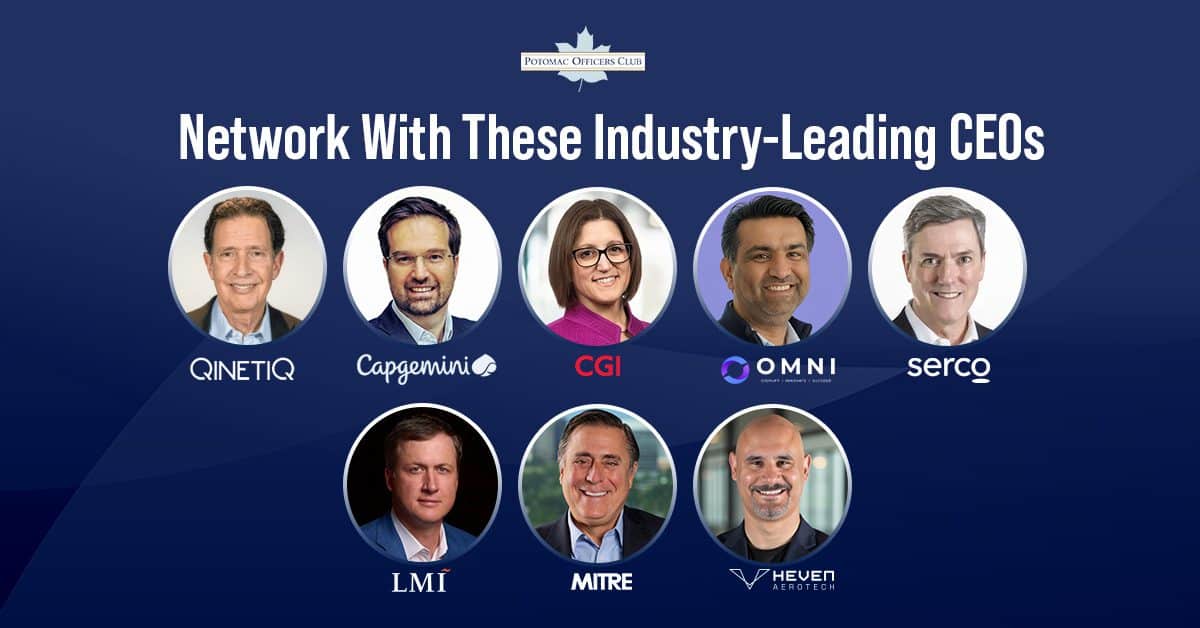
For Michael LaRouche, CEO of Serco and Wash100 awardee, leadership begins with focusing on people rather than simply the ideas or strategies leaders want to implement.
“The people have built the organization and went through the challenges,” LaRouche said. “No one really cares about your brilliant idea … until you care about what they’re doing.”
That mindset also shapes how leaders guide organizations through change. Rather than asking employees to align only with the company’s current direction, LaRouche said leaders should focus on preparing their teams for where the organization needs to go next.
“Let’s make everyone an advocate for change,” he said, explaining that transformation is most effective when employees feel ownership in building the future solution.
Mark Peters, president and CEO of MITRE and also a Wash100 Award recipient, highlighted the importance of mission connection as a key driver of employee engagement in the GovCon sector. Many professionals across the industry are deeply committed to supporting government missions, which can provide a strong foundation for leadership.
People across the organization are “deeply connected to the mission,” Peters said, adding that leaders must also respect the organization’s history and culture. “We’re focused on understanding where we came from so we don’t mess it up, but build on it.”
At the same time, Peters noted that earning trust requires more than simply listening. Leaders must balance gathering input with making timely decisions, particularly in fast-moving environments.
“You have to listen, but you also have to move and decide things,” he said, explaining that effective leaders aim to hear from as many perspectives as possible before guiding the organization forward.
Michael Buscher, president of U.S. operations at Heven AeroTech, emphasized that trust can also be built through direct engagement with employees’ work. By spending time with engineers and technical teams, leaders gain a better understanding of the value their employees are creating. Rather than relying on motivational speeches, Busher said leadership is about recognizing and reinforcing the impact of employees’ everyday contributions.
Josh Wilson, CEO of LMI, echoed the importance of demonstrating genuine care for employees, particularly during periods of organizational change.
“It’s hard to do anything transformational if people don’t believe you deeply care about them,” Wilson said, adding that providing predictability and stability can help employees navigate uncertainty.
For LaRouche, leadership itself is an ongoing learning process. Building trust and alignment requires humility and a willingness to grow alongside the organization.
“You can’t be successful without getting everyone onboard,” he said. By maintaining the discipline to continually learn from employees, LaRouche added, leaders can build the followership needed to guide organizations through change.
Together, the executives said a people-first approach remains central to sustaining performance and innovation across GovCon organizations ensuring that as strategies evolve, the workforce remains aligned, engaged and ready to meet the mission.


Category: Articles