
Can AI Make Healthcare Delivery Faster and Smarter?
- Artificial intelligence is quietly transforming military and veteran healthcare, delivering faster diagnoses, smarter treatments and lower costs
- AI is helping both clinicians and patients with tasks such as analyzing biometric data from wearable devices
- Hear from top federal officials and industry experts how AI is changing healthcare at the Potomac Officers Club’s 2025 Healthcare Summit this Thursday—Feb. 12!
Artificial intelligence is quietly transforming military and veteran healthcare, delivering faster diagnoses, smarter treatments and lower costs. The technology has the potential to provide transformative insight into chronic disease by analyzing data that often exists in isolation.

How Is AI Changing Healthcare Delivery?
AI is helping healthcare providers analyze simple biometric data obtained from wearable devices and make meaningful recommendations for both clinicians and patients. It is also helping patients with analyzing test results and preparing them for appointments.
Which AI Companies Are Getting Into Healthcare?
AI technology such as Amazon’s AI chatbot can take biometric signals in realms including consumer behavior, appointment scheduling and lifestyle patterns. It then interprets these intricate datasets and creates meaningful explanations for users and health professionals, according to Forbes.
OpenAI is rolling out its own health-focused AI platform. This chatbot, dubbed ChatGPT Health, is similar to Amazon’s AI chatbot in that operators can link medical records and wellness applications. This can guide users through test results, prepare them for medical visits, compile workout strategies and compare health plans, Healthcare Dive reported.
Anthropic is also getting into the AI healthcare game. The company in January released its Claude for Healthcare, with a goal of helping professionals tackle tasks such as prior authorization, identifying documentation oversights, and drafting documents for review.
Who Are the Experts in AI for Healthcare?
Discover more ways AI is changing the paradigm of healthcare at the Potomac Officers Club’s 2025 Healthcare Summit this Thursday, Feb. 12! Attend the Faster Benefits, Stronger Confidence: Modernizing Healthcare Delivery panel discussion to hear how top federal officials are leveraging emerging technologies to improve real-time visibility across healthcare systems and deliver benefits faster with better accuracy. Be the first to learn how agencies are preparing for the next wave of challenges—Sign up today!
Let’s dive into the panel members.

Richard Riley (moderator)
Growth Leader for Health, SAIC
Richard Riley brought his extensive healthcare career to SAIC in 2024 when he became capture manager. An accomplished leader with broad experience in strategic capture management and business development across federal markets, Riley had previous capture positions at UKG, DSFederal and Phillips.
Riley’s Marine Corps experience, having retired as a sergeant in 2008, provides illuminating insight into veteran healthcare.
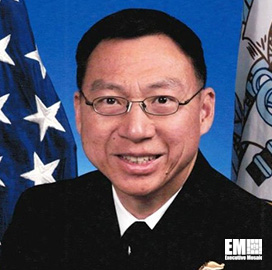
Capt. Victor Lin
Navy Clinical Informatics Speciality Leader, U.S. Navy
Capt. Victor Lin is a visionary health informatics leader with 10 years’ experience leading military health IT and digital health strategy, implementation and optimization. He has six years of operational medicine experience with the Marine Corps, including two combat tours, as battalion, regimental and interim division surgeon.
As Navy clinical informatics specialty leader, Lin serves as a subject matter expert and advises Navy medical leadership about the specialty of clinical informatics. He also directs and coordinates recruitment, training, utilization and retention of informaticists within Navy Medical Corps.
Lin is also a visionary and seasoned chief medical informatics officer and physician informaticist.

Matthew Quinn
Science Director, Army Telemedicine and Advanced Technology Research Center
Matthew Quinn is a highly-sought after expert for his work at the Army’s Telemedicine and Advanced Technology Research Center, a direct reporting unit under the Army Medical Research and Development Command. The ATATRC performs and enables research in its four core areas: human technology teaming and medical performance research, data sciences, engineering and robotics, and science technology innovation management and synchronization.
Quinn has had a long career in healthcare. He spent three and a half years as the senior advisor for health information technology at the Health Resources and Services Administration. Quinn, from 2016 to 2020, contributed cross-HRSA leadership and expertise on health technology issues to influence policy.
He also served as the managing director for healthcare and life sciences at Intel from 2014 to 2016. Quinn, here, led Intel’s Precision Medicine Initiative in collaboration with the White House and guided Intel’s response to the Ebola crisis in addition to next-generation pandemic and big data interoperability applications.
Quinn was the director of healthcare initiatives at the Federal Communications Commission from 2013 to 2014.
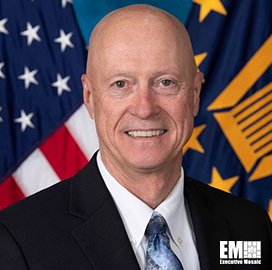
Robert Cunningham
Executive Director for Enterprise Command Operations, Department of Veterans Affairs
Robert Cunningham is a long-time health technology and veteran healthcare expert. An 11-year Air Force veteran himself, he leads the VA ECO’s round-the-clock operations and serves as its single point of contact for IT issues.
Cunningham measures success in the time to resolve incidents, level of service disruptions and patient satisfaction. The ECO provides a transparent and immediate response to IT issues that range from nationwide emergencies and outages to emergencies that affect individual operators, according to his bio.
By using metrics including minimized downtime, increased mean-time-to-resolve, accelerated responses to outages and improved resolution of customer calls, Cunningham has his team focusing on high-impact VA service to veterans.


Category: Articles