
MHS Genesis: How the Pentagon Built a Single EHR for 9.5M Military Beneficiaries
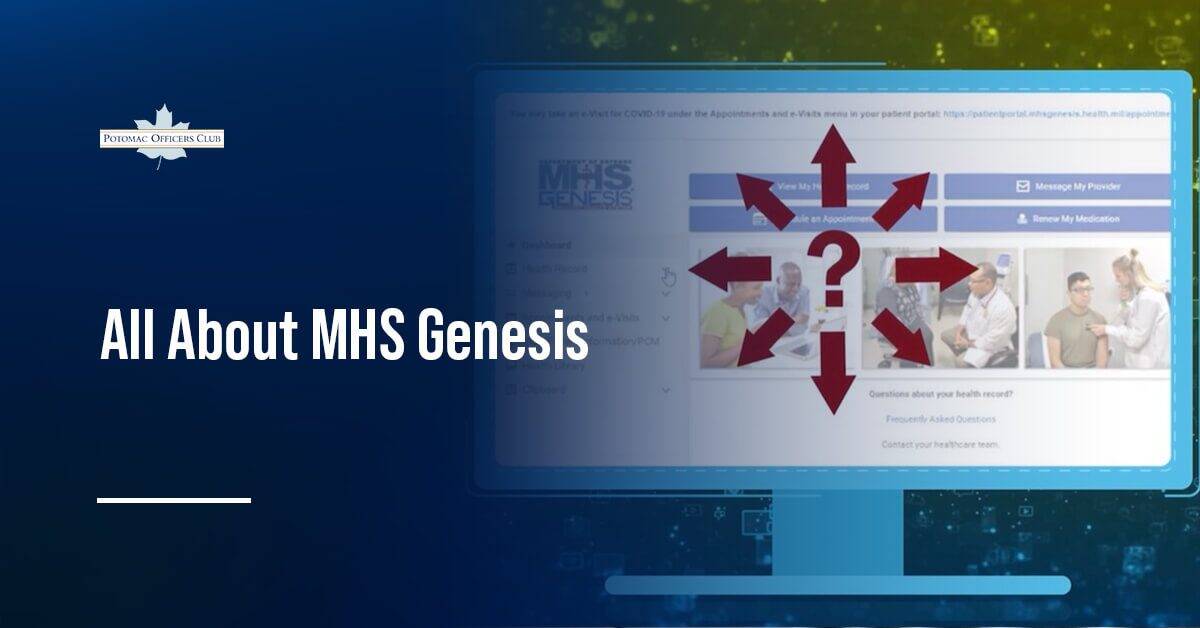
One of the Department of War’s largest modernization projects is MHS GENESIS, the Military Health System’s electronic health record platform designed to serve as a single source of health records for service members, veterans and their families.

In 2017, the Pentagon kickstarted a journey to replace its network of legacy systems with a common EHR that will be available to patients wherever they go.
Meet the leaders transforming federal EHR at Potomac Officers Club’s 2025 Healthcare Summit on Feb. 12. Bill Tinston, director of the Federal Electronic Health Record Modernization Office, will sit on a fireside chat with Cori Hughes, director of program integration at the FEHRM. Do not miss your chance to gain valuable insights from Tinston, Hughes and other key government and industry officials by signing up today.
“MHS GENESIS will be the thread that connects our people, our military members, their families and our veterans, to a lifetime of seamless, high-quality health care,” stated Gary Ashworth, former acting assistant secretary of war for acquisition, in 2023. “No matter where our people are stationed, they can be assured that their health records will be easily available.”
With over 9.5 million DOW beneficiaries, MHS GENESIS is the largest, single modern EHR system in the world.
It replaces the TRICARE patient portal, or TPP, the old DOW platform for military beneficiaries to access health information and other medical services. TPP was officially decommissioned on April 1, 2025.
MHS GENESIS’ Deployment Timeline
DOW is rolling out MHS GENESIS at all military treatment facilities across the continental United States and overseas through a 23-wave rollout strategy, allowing the department to learn from previous waves and improve future deployments. Each wave spanned 18 months, with a new wave starting every three months.
The EHR system first went live at four sites in the Pacific Northwest — Fairchild Air Force Base, Naval Health Clinic Oak Harbor, Naval Hospital Bremerton and Madigan Army Medical Center — as part of its initial field testing in 2017.
Full operational deployment started in September 2019 at the David Grant USAF Medical Center at Travis Air Force Base, Naval Health Clinic Lemoore at Naval Air Station Lemoore and U.S. Army Health Clinic Presidio of Monterey in California and the 366th Medical Group at Mountain Home Air Force Base in Idaho.
By September 2023, the system went online at military hospitals and clinics in Europe, including in Belgium, England, Germany, Italy, Spain and Turkey. MHS Genesis was deployed in South Korea and Japan in October 2023.
The DOW opened MHS GENESIS to providers and patients at the joint DOW/Department of Veterans Affairs Captain James A. Lovell Federal Health Care Center in Illinois on March 9, 2024, officially ending the system’s 24-wave rollout spanning seven years.
“This will not only benefit the patients and staff in North Chicago, but all joint sites that need joint solutions to effectively deliver care,” Bill Tinston, director of the Federal Electronic Heath Record Modernization Office, said following MHS GENESIS’ launch at Lovell FHCC.
The system is available at all DOW garrison facilities, 138 parent military hospitals and clinics, and over 3,600 locations worldwide.
Which Companies Developed MHS GENESIS?

In July 2015, the Pentagon awarded a $4.3 billion contract to Leidos Partnership for Defense Health, or LPDH, to modernize it
s healthcare system.
LPDH is a consortium made up of four core members — Accenture, Henry Schein One and Oracle Cerner, now known as Oracle Health — and approximately 35 businesses, including Leidos, as the lead systems integrator, provided daily oversight of the program and overall EHR architecture and deployment strategy.
Meanwhile, Oracle provided Cerner Oracle Millennium, the cloud-based EHR system that served as the foundation of MHS GENESIS.
Henry Schein’s Dentrix Enterprise contributed dental capabilities for the military EHR, while Orion Health deployed its Orion Rhapsody Integration Engine to enable external information exchanges, according to a document from the Director of Operational Test and Evaluation within the Office of the Secretary of Defense.
Amwell, a telemedicine company, also secured a contract in 2023 to provide its Converge hybrid care enablement platform to replace the MHS Video Connect, a web-based telehealth service, and support LPDH’s mission to deliver improved access to primary and behavioral healthcare.
Services MHS Genesis Offers
Aside from serving as an EHR, MHS GENESIS also delivers a range of services for beneficiaries through its patient portal. The services include:
- Access to patient health data, including clinical notes and laboratory and test results
- Electronically request refills and renewals
- Book, modify or cancel appointments
- Securely send and receive messages from healthcare providers
- Get vital health information directly from healthcare professionals through modern telehealth patient portals
The 2025 Healthcare Summit on Feb. 12 will have a panel on modernizing healthcare delivery featuring Robert Cunningham, executive director for enterprise command operations at the Department of Veterans Affairs, and Richard Riley, growth leader for the health market at SAIC. Sign up today.
What Are the Benefits of MHS GENESIS?
The multi-billion-dollar system is designed to deliver a wide range of benefits for patients and healthcare providers, including:
- A single, lifetime health record — MHS GENESIS provides a unified, integrated health record that follows service members and their families throughout their lives. By consolidating medical and dental data into one common federal EHR, it ensures a “warm handoff” of information as members transition from active duty to the VA or civilian life.
- Seamless connectivity — The system functions as a global health information exchange. Whether a patient receives care from the DOW, Department of Veterans Affairs, Department of Homeland Security’s U.S. Coast Guard or participating providers, their data is instantly accessible. This eliminates the need for patients to manage paper records or repeat their health history at every new location.
- Improved clinical efficiency — Clinicians no longer have to toggle between multiple outdated systems, allowing providers to spend less time navigating software and more time making informed care decisions.
- Patient safety — The system includes built-in safeguards to prevent conflicting treatments and medical errors, including the Bar Code Medication Administration technology to verify information. Additionally, because records are shared in real-time, patients are subjected to fewer duplicative tests and unnecessary procedures, potentially leading to safer and more efficient care.
- Increased accountability and oversight – MHS GENESIS allows Pentagon leadership to monitor system activities, tracking how long tasks take and ensuring staff are operating at the highest level. This data-driven approach holds personnel accountable and is meant to ensure the military medical community is operating at peak efficiency to support mission readiness.
Combining AI and MHS Genesis Data
A demonstration by a team from the Defense Health Agency Chief Data and Analytics Office revealed an additional benefit to MHS Genesis: enhancing warfighter readiness with artificial intelligence.
During the National Defense Industrial Association’s Emerging Technologies for Defense Conference & Exhibition in August 2025, the team utilized “synthetic data similar to what we see in MHS GENESIS,” combined it with readiness policies and a software application they developed to automate aeromedical waiver generation for U.S. Air Force pilots. The prototype made the process of medically clearing pilots for deployment more efficient, shared Junayd Park, functional lead for application prototyping and integration at the DHA CDAO.
“Leveraging AI capabilities, we were able to demonstrate a significant decrease in the time that a doctor would take to process aeromedical waivers,” Chris Kittrell, an agency branch chief.“Our solution demonstrated the ability to get this down to less than 30 seconds.”
Hear from FEHRM Director Bill Tinston and other leaders revolutionizing healthcare delivery across government at the Potomac Officers Club’s 2025 Healthcare Summit, happening on Feb. 12 at the Falls Church Marriott Fairview Park in Virginia. Secure your tickets while you still can!


Category: Articles