

Photo: U.S. Navy / John F. Williams
Railgun Explained: How It Works and Why the Navy Is Testing It Again
Railguns, once viewed as a breakthrough U.S. Navy weapon and later shelved after years of technical challenges, are quietly reentering defense discussions.
New testing activity, proposed warship designs and global experimentation have pushed the electromagnetic weapon back into focus. At the same time, the technology is evolving beyond its original purpose, shifting from a potential frontline weapon to a tool supporting hypersonic weapons development and missile defense.
What Are the Latest Developments in Railgun Technology?
Recent developments have driven renewed interest in railguns, particularly among defense planners and industry stakeholders:
- The U.S. Navy conducted new live-fire testing in 2025 at White Sands Missile Range, The War Zone reported.
- The tests supported the Pentagon’s Joint Hypersonics Transition Office, signaling a shift toward hypersonic research applications
- The Navy paused the program in 2021 after technical challenges including barrel wear and power limitations, as national security analyst Jack Buckby wrote in analysis of the Navy railgun program’s cancellation and evolution
- Proposed Trump-class battleships include a 32-megajoule railgun as part of their planned armament in the Golden Fleet initiative, DefenseScoop said.
- Industry organizations like General Atomics have continued development behind the scenes and are in discussions with the government, Naval News shared.
- Japan has successfully tested a ship-mounted railgun at sea, marking a major milestone in operational experimentation
- China is advancing new railgun concepts aimed at increasing firepower and range
Together, these developments suggest railguns have not disappeared. Instead, they are entering a new phase of relevance within modern military research, hypersonic testing and future force design.
For the latest intelligence on railguns and the Navy’s future plans for the weapon system, check out Potomac Officers Club’s 2026 Navy Summit, coming Aug. 27. This GovCon networking event will gather top naval leadership with industry for a productive day of keynotes, panel sessions and in-depth technology discussions. Register now!
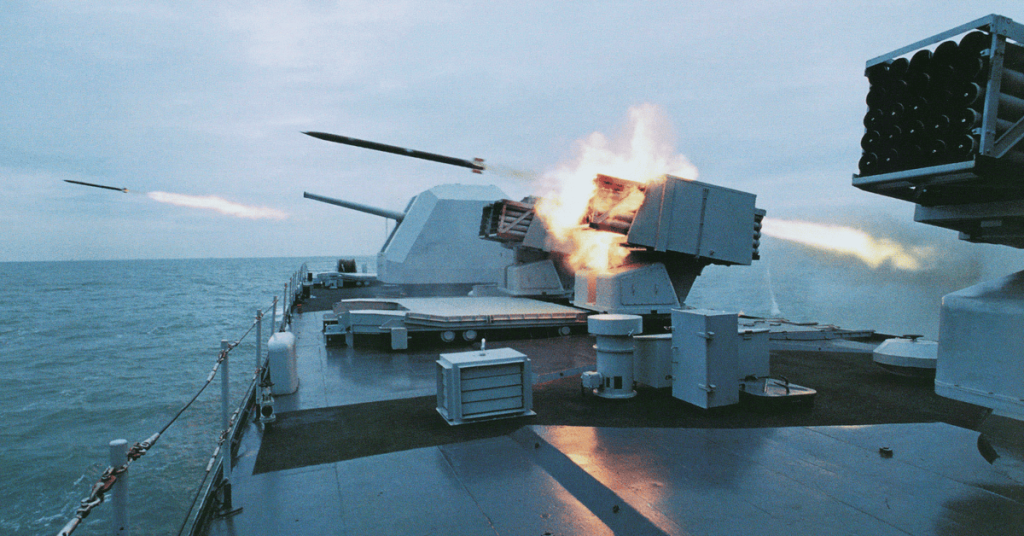
What Is a Railgun?
A railgun is an electromagnetic weapon that uses electrical energy instead of chemical propellants to launch projectiles at extremely high speeds.
The system consists of two conductive rails and a projectile, known as an armature. When a powerful electric current passes through the rails, it generates a magnetic field that accelerates the projectile forward.
This process allows railguns to achieve velocities of several kilometers per second, often reaching speeds between Mach 6 and Mach 7. Unlike conventional artillery, railguns rely on kinetic energy rather than explosive payloads, enabling long-range precision strikes.
How Does a Railgun Work?
Railguns operate based on the principles of electromagnetism, specifically the Lorentz force.
When electrical current flows through the rails and the projectile, it creates a magnetic field that generates a forward force. This force propels the projectile down the rails at hypersonic speeds.
Because the system does not use gunpowder, it eliminates the need for traditional propellants while allowing for greater projectile velocity and range. In early testing, the Navy demonstrated shots delivering more than 30 megajoules of energy, underscoring the system’s destructive potential.
Why Did the Navy Pursue Railguns?
 The U.S. Navy began investing heavily in railgun technology in the mid-2000s as part of its push for next-generation naval weapons.
The Office of Naval Research launched the program in 2005 with the goal of developing a system capable of striking targets more than 100 miles away using electromagnetic acceleration.
Railguns offered several potential advantages:
- Extended range and higher velocity
- Reduced reliance on explosive ammunition
- Lower cost per shot compared to missiles
The technology was seen as a natural fit for platforms like the Zumwalt-class destroyers, which were designed with advanced power-generation systems capable of supporting high-energy weapons.
Why Did the Navy Cancel the Railgun Program?
Despite early promise, the Navy ultimately shelved the railgun program in 2021 after investing more than $500 million over roughly 15 years.
Several technical challenges proved difficult to overcome:
Barrel degradation
The intense electrical currents required to launch projectiles caused severe wear on the rails, sometimes after only a few dozen shots
Power requirements
Railguns required massive onboard energy generation
Sustained firing limitations
Maintaining consistent performance across repeated shots proved difficult
Combined with shifting priorities toward hypersonic missiles and directed-energy weapons, these issues led the Navy to deprioritize the program.
Is the Navy Railgun Program Coming Back?
The answer is nuanced.
The Navy has not formally revived the railgun as a frontline weapon program. However, recent developments indicate the technology remains active.
The 2025 testing campaign suggests the system is still operational and being used for research purposes. The involvement of the Joint Hypersonics Transition Office points to a broader role supporting hypersonic weapons development.
At the same time, the inclusion of railguns in future warship concepts signals that the technology remains under consideration for operational use.
How Are Railguns Used in Hypersonic Weapons Research?
One of the most important shifts in railgun development is its role in hypersonic research.
Rather than serving solely as a weapon, railguns can act as test platforms for extreme-speed environments.
They allow researchers to study:
- Material performance under extreme heat and pressure
- Sensor behavior at hypersonic speeds
- Structural stress on high-velocity projectiles
Because railguns can replicate hypersonic conditions without requiring full missile launches, they offer a more cost-effective testing method.
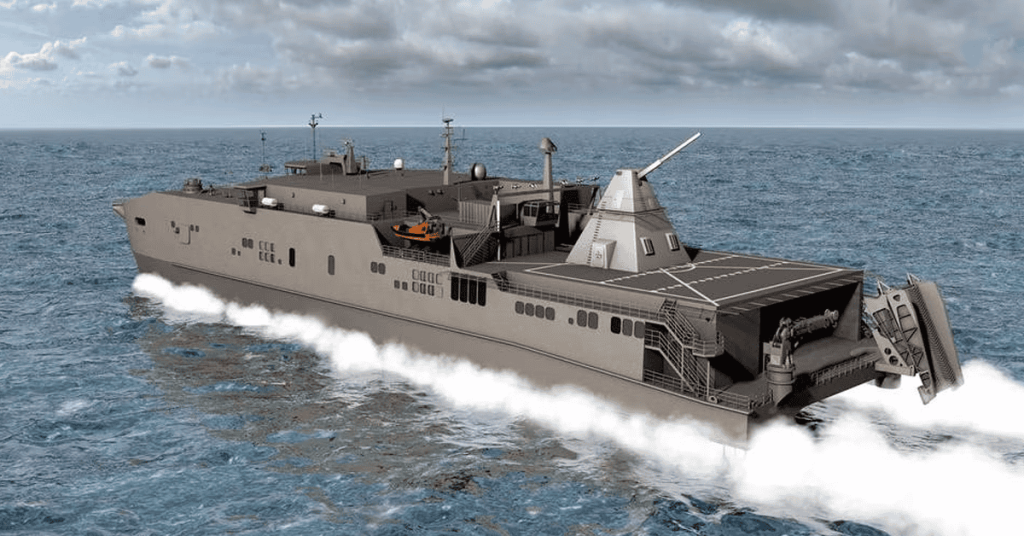
Could Railguns Be Installed on Future Navy Warships?
Proposed Trump-class battleships have brought renewed attention to the possibility of operational railguns.
DefenseScoop said that the planned ships would feature a mix of advanced weapons, including hypersonic missiles, lasers and electromagnetic railguns, with a 32-megajoule system envisioned as part of the platform’s armament.
The vessels are designed to deliver significant firepower and operate as command-and-control hubs, but analysts have raised concerns about integrating multiple emerging technologies into a single platform.
Challenges that affected earlier railgun development, including durability and power demands, may still need to be addressed before the system can be deployed at sea.
What Is China Doing With Railgun Technology?
China has remained an active player in railgun development, though the public reporting reflects both credible research and more speculative claims.
Interesting Engineering reported that Chinese military researchers have proposed an “X-shaped” or “double-decker” railgun design that stacks two electromagnetic launch systems together, allowing them to fire in parallel. The concept is intended to increase firepower and range by enabling larger projectiles, potentially around 60 kilograms, to be launched at speeds of roughly Mach 7.
The design also aims to address a key limitation of earlier systems: the immense electrical and thermal stress placed on components. By distributing power across multiple rails, researchers believe the system could improve performance without the same level of material degradation, though the concept has not yet undergone live-fire testing.
Separately, Asia Times reported that China has continued experimenting with electromagnetic launch systems capable of accelerating payloads to hypersonic speeds, including tests that have reached the upper atmosphere at speeds exceeding Mach 5. The report also noted the unveiling of an “X-rail gun” concept capable of firing projectiles to ranges of up to 400 kilometers.
At the same time, some of the more dramatic online claims about Chinese railgun capabilities remain unverified. Viral videos and references to so-called advanced plasma weapons have circulated widely, but analysts generally treat those claims with caution.
Taken together, the available evidence suggests China is continuing to invest in railgun-related technologies, but the systems remain in development rather than operational deployment.
Learn how the U.S. Navy plans to technologically compete with China — and the partnership opportunities available therein — at Potomac Officers Club’s 2026 Navy Summit on Aug. 27.
How Do Railguns Fit Into Missile Defense?
Beyond naval warfare, railguns are increasingly being explored for missile defense roles.
Asia Times reported that U.S. industry and defense planners are examining how railguns could be integrated into missile and drone defense architectures, including efforts to protect locations such as Guam from ballistic and cruise missile threats.
In that context, railguns have been proposed as a potential terminal defense solution capable of intercepting incoming threats at high speed. Unlike traditional interceptors, they could offer deeper magazines and lower cost per shot, making them attractive for countering saturation attacks.
This potential role reflects a broader shift in how the technology is being viewed, from an experimental naval weapon to part of a layered defensive architecture.
What Are the Advantages and Limitations of Railguns?
Advantages
- Extremely high projectile velocity
- Long-range precision
- Lower cost per shot compared to missiles
Limitations
- High energy requirements
- Component wear and maintenance challenges
- Integration complexity for naval platforms
What Is the Future of Railgun Technology?
Railguns remain a promising but evolving technology.
While they have not yet become operational weapons in the U.S. Navy, their continued use in research, their potential role in missile defense and their inclusion in future warship concepts suggest they are far from obsolete.
Instead, railguns are transitioning from a standalone weapon system into a broader enabling technology, supporting hypersonic development, missile defense and potentially future naval platforms.


Category: Articles