How Is Mission-Ready AI Infrastructure Addressing the Need for Secure AI?
- Mission-ready AI infrastructure is AI that is designed to operate in secure environments and is immediately capable of doing so
- Attend Potomac Officers Club’s 2026 Artificial Intelligence Summit to learn more about how leaders in AI are advancing the technology in defense and intelligence
- Federal focuses for AI include accelerating innovation, maintaining security, agent development and warfighting capabilities.
As artificial intelligence moves to the forefront of federal modernization efforts, agencies, especially across the Department of War, face the challenge of constructing robust, scalable and secure AI infrastructure. Mission-ready AI infrastructure enables the security and reliability of digital tools used in secure environments, enabling agencies to adopt these systems and support the U.S. as we race toward building the world’s largest AI ecosystem.

What Is Mission-Ready AI Infrastructure?
Mission-ready AI infrastructure refers to a secure, resilient and scalable technology framework that can run AI models in high-security and regulated environments such as defense organizations and government agencies. Where the term “AI-ready” refers to establishing the foundational data and hardware, “mission-ready” implies that the system is fully deployed, validated and capable of supporting mission-critical operations.
 Be the first to learn about the latest on AI infrastructure and expansion at the Potomac Officers Club’s 2026 Artificial Intelligence Summit on March 18! Learn more about how federal buyers are integrating cutting-edge computing resources by joining the Building Mission-Ready AI Infrastructure panel discussion. Hear directly from the Army, FBI and State Department’s chief AI officers during the conversation, and other government leaders in AI and industry influencers across the event— register today!
Unlike commercial AI infrastructure, mission-ready AI infrastructure is designed to support classified and secured operations throughout the entire lifecycle of AI, from data ingestion and training to inferencing, ensuring reliability for mission-critical operations. The system starts with a secure foundation, validating all users and devices utilizing the software in a zero-trust framework, and preparing clean, organized data for ingestion. Mission success increasingly depends on integrating leading intelligence tools, seamless data flow, and uncompromising security at every layer.
What Does Zero Trust Mean for Cybersecurity?
The zero trust principle assumes that the network is both internally and externally compromised, which governs strict protocols including frequent user and device validation, minimum level of access for users and segmentation of the network into small, secured zones. Using this framework within mission-ready AI infrastructure ensures that the system is grounded in preventing unauthorized access to data.
How Have Security Concerns Hindered AI Adoption at Federal Organizations?
The Government Accountability Office has recognized cybersecurity challenges to AI implementation across federal agencies as integrating the technology into operational environments can introduce risks that require strict monitoring and compliance. Security is of the utmost importance to federal agencies which handle vast amounts of citizen data and classified information. Concerns include adversarial attacks, such as data poisoning, exploitation of AI models, theft of AI models and misuse of the tools.
The Cybersecurity and Infrastructure Security Agency, in collaboration with international and other federal agencies, has published guidance for the secure integration of AI in operational technology environments. According to the guidance, agencies must understand AI and its use within the domain, establish AI governance and assurance frameworks and embed oversight and failsafe practices into the technology to ensure security throughout implementation and use. Mission-ready AI infrastructure can help to ensure the level of security required by federal organizations, built on zero trust principles, secure data management and security tools embedded into the software.
What Are the Top Federal AI Priorities?
Federal AI priorities remain in-line with President Trump’s AI Action Plan, which lays out three pillars — accelerating innovation, expanding AI infrastructure and leading international diplomacy and security.
The Department of War recently announced its AI Acceleration Strategy, focused on warfighting, intelligence and enterprise operations. The strategy’s warfighting focus seeks to develop a network of AI agents to support campaign planning and decision making, establish swarm forge, a mechanism to iteratively enhance warfighting with AI capabilities through discovery, testing and scaling, and accelerate AI-enabled simulation capabilities and feedback loops. In intelligence, the agency is focused on acceleration of TechINT development pipelines and transforming deterrence from posturing to pressure. On the enterprise front, DOW is expanding access to generative AI models, including their own GenAI.mil, and codifying the strategy for building and deploying secure AI agents throughout their workflows. The Pentagon’s GenAI.mil has been adopted by all branches of service under their department, with over one million users to date.
The Department of Justice has also named their top priorities for AI adoption and implementation: addressing knowledge, risk and capability gaps to cultivate an AI-ready workforce, implementing AI data standards coupled with maximizing use and reuse of training data, promoting ethical and efficient governance of AI in accordance with established law, guidance, principles and best practices, and, finally, accelerating adoption of AI by mission operators and stakeholders through the use of pilots and knowledge-sharing.
Learn More About Mission-Ready AI Infrastructure at the 2026 AI Summit
Maintaining the integrity of secured environments when integrating AI is a dynamic and fast-moving topic. At the 2026 Artificial Intelligence Summit on March 18, attendees of the Building Mission-Ready AI Infrastructure: Designing a Data and Security Foundation for the Future panel will dig into how AI leaders are thinking about maintaining data security while accelerating AI use throughout federal operations. Panelists will take part in discussing the most pressing AI needs and challenges across defense and intelligence operations.
Find out more about our industry-leading panel participants:
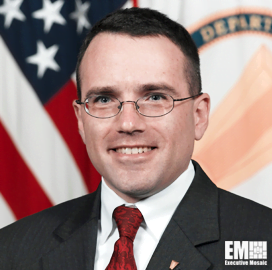
Dr. David Markowitz
Chief Data Officer and Analytics Officer, Army
Dr. Markowitz was selected in 2020 to the position of chief data officer where he serves as an advisor on data and data analytics strategy to the chief information officer and other top ranking officials. He brings 20 years of experience in senior technical positions at Army, and seven years of experience at DOW as director of the simulation and analysis center. Dr. Markowitz earned a PhD in operations research from MIT and a degree in mathematics from Harvard University.

Katie Noyes
Chief AI Officer, FBI
Noyes has spent 20 years at the FBI where she currently leads the FBI’s AI strategy, management and infrastructure, focused on leveraging digital tools to keep Americans safe and to combat exploitation of AI for criminal activity. She previously served as a section chief in the Science & Technology Branch, leading next generation technologies and lawful access challenges. Prior to joining the agency, Noyes worked within the intelligence community as an Army military intelligence officer, then at the Pentagon in the Defense Intelligence Agency and DOW Counterintelligence Field Activity.

John Silson
Director of AI and Innovation, Department of State
Silson leads enterprise-wide AI strategy and implementation at the Department of State where he focuses on ensuring secure LLM deployment and AI governance across secure systems, responsible for the AI infrastructure to support 70,000 global users. He has previously held numerous roles over his 20 years at the department, beginning as an expert in economics and culminating as the deputy director of the Office of Monetary Affairs before transitioning into analytics and AI.

Mark Andress (Moderator)
Global Vice President, Oracle
Andress, who currently leads cloud, software, and hardware sales across the DOoW for Oracle, brings more than 30 years of experience in defense intelligence to the panel. Before joining Oracle, he served as the chief iInformation officer of the National Geospatial-Intelligence Agency, where he oversaw all development, governance, management and innovation related to NGA’s information technology infrastructure. Previously, Andress has held intelligence positions at the Pentagon, serving as the assistant deputy chief of naval operations for information warfare and division director for the Navy’s command, control, intelligence, surveillance and reconnaissance programs.
 Mark Chism
Senior Solutions Engineer, Cloudera Government


Category: SEO