Key Takeaways From the 2026 FedCiv Summit
Co-authored with Pat Host
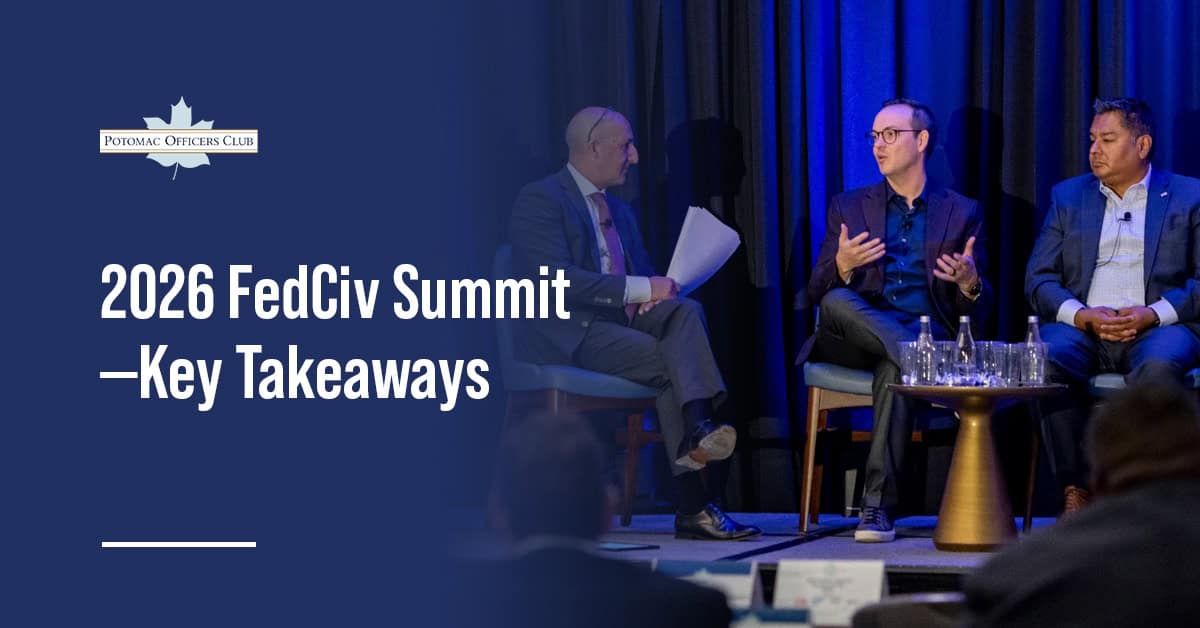
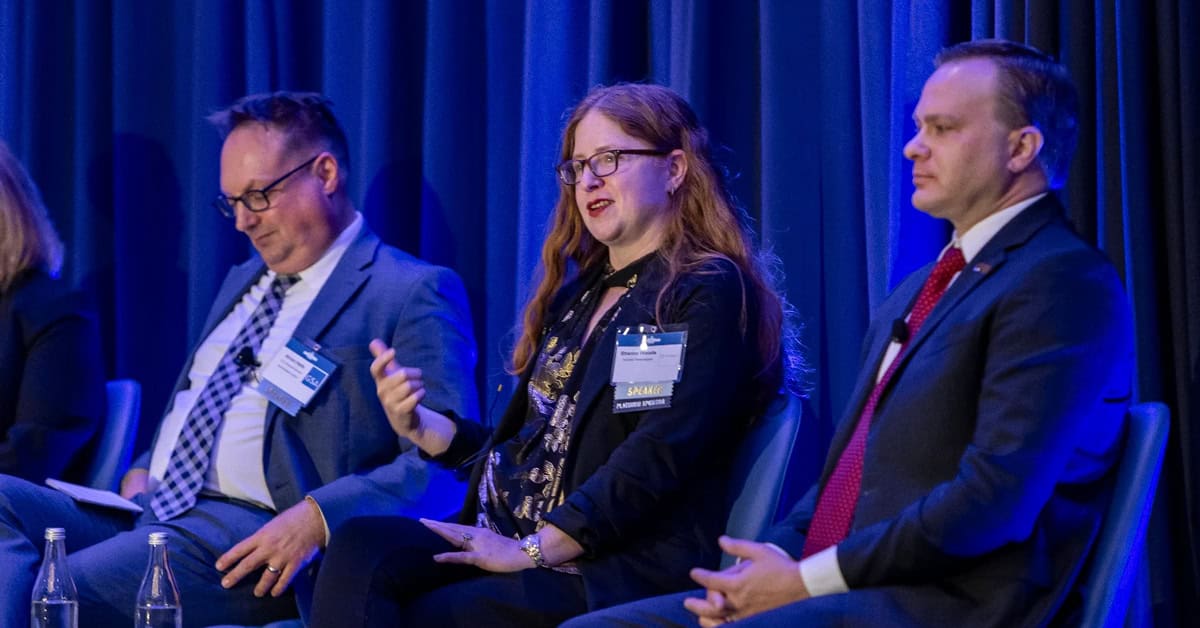
Potomac Officers Club often takes a defense industry focus for its sector-leading GovCon networking events, but on Oct. 29, it turned its attention to federal civilian agencies for its first-ever FedCiv Summit.
Throughout the day’s sessions, which were held at the beautiful Ritz-Carlton, Pentagon City, attendees heard from esteemed speakers representing agencies like the General Services Administration, the Department of Labor, U.S. Customs and Border Protection, the Department of Energy and many more. These leaders discussed the technologies they’re working with industry to develop and implement to make their work more efficient and impactful.
Artificial intelligence was a chief concern of course, as was maximizing the value of emerging technologies and strategizing about the right ways to embed them in the workforce.
See below for our key takeaways from the 2026 FedCiv Summit and be sure to sign up for Potomac Officers Club’s upcoming 2026 Healthcare Summit, its annual exploration of the complex web of industry-government partnerships that make up the vast federal health apparatus. Register now for this Dec. 3 GovCon conference!
What Were the Key Takeaways From the 2026 FedCiv Summit?
Money, Funding Are Important, But Won’t Get You All the Way There
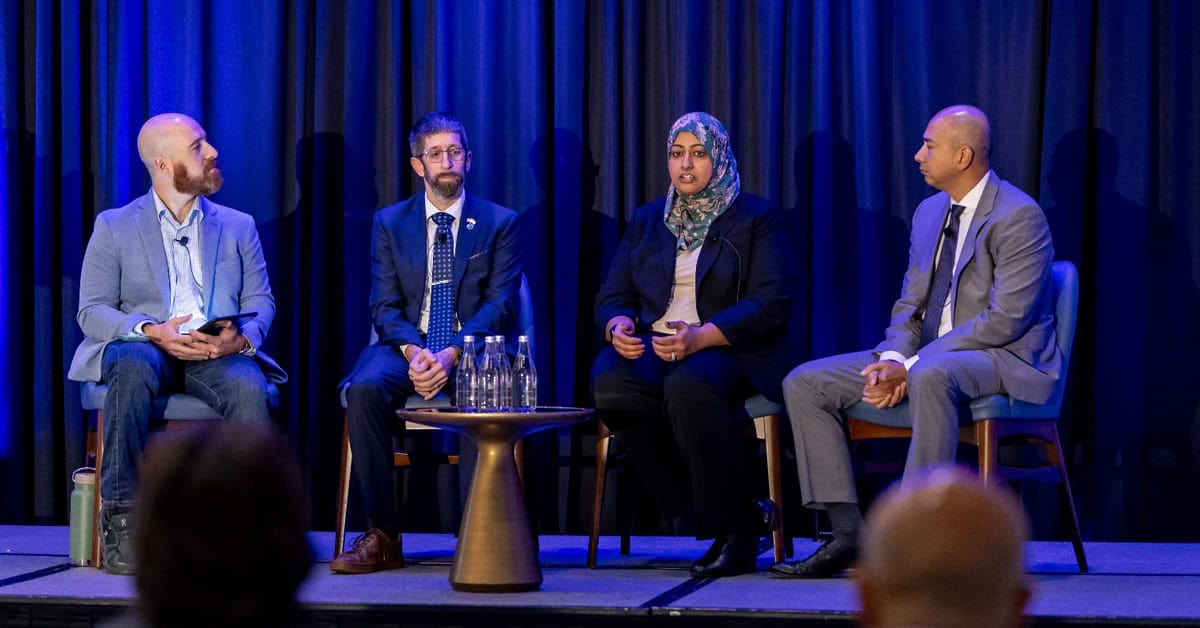
While money and funding are important to federal agencies, they need a culture change to think of the value being generated by technology modernization efforts for maximum impact. Mangala Kuppa, Department of Labor chief information officer, said during her keynote address that technology professionals need to change how they define success from achieving certain metrics to mission-focused results, like helping the public easily navigate when they need government services.
“We truly have to shift our culture to thinking of value generating,” Kuppa said. “That will be your guide to determining which investments are worthy to invest time and energy, and which investments are going to, in the long run, benefit the organizations that you are part of.”
Earlier in the day, the General Services Administration’s Polly Hall, in her keynote, foot-stomped this idea and stressed the importance of fiscal responsibility on behalf of citizens.
“The White House has backed this imperative with continually growing civilian IT budget requests. But as every CIO, CTO, tech lead, solutions provider in this room today understands, the financial resources alone do not solve our complex IT modernization hurdles. As responsible stewards of public funds, we have to ensure that every IT dollar we invest in delivers modern digital capability,” Hall said.
During a panel on observability and shared services, Adam Nemethy, N-Wave director at the National Oceanic and Atmospheric Administration, said that customers need to be realistic about what services they’re going after and how much those things will cost.
“I think everybody wants this pie in the sky, I can see anything all the time and have all this, but it’s always putting in the numbers. I like to think anything can always be done. It’s just a number. Like how much are you willing to spend to do that? It doesn’t have to be a lot, but it’s just being open and honest about it,” Nemethy commented.
“At this cost, is that where you want to spend your money? And if yes, we’ll do that. And if no, that’s okay…There’s a cost to maintain, there’s a cost to do all these things. And so I think at the higher levels, people are making a cost versus capability decision every day, right?…sometimes you have to really get out there and tell and explain like what the benefit [of the desired service] is,” he continued. — Pat Host & Charles Lyons-Burt
We spoke with Nemethy for some additional comments after his panel, asking him what advice he would give businesses looking to work with N-Wave for the first time:
And what N-Wave’s network will look like in five years:
HR Pros Need to Firmly Encourage Agentic AI Use
Human resources professionals need to firmly encourage federal employees to better use agentic AI to maximize its robust analytical potential. Sharon Woods, Invisible Technologies senior vice president and head of global public sector, said during the Human Capital at the Speed of Mission panel that while many federal staffers are becoming fluent in using AI for basic tasks, they’re missing out on the power of agentic AI for incredible reasoning and insights such as: what percentage of a division is eligible for retirement in the next few years or what percent of billets are unfilled?
“Insist it happens and be ready for it,” said Woods, a former Pentagon technology executive. “A lot of government offices say they are doing it and they’re not…I would have loved to have (received) this insight from, you know, the HR professionals that were supporting me. Not just using super intelligence to enable the HR organization, but integrating that data across procurement, across finance.” — PH
Some Federal Officials Need Change Management to Embrace AI
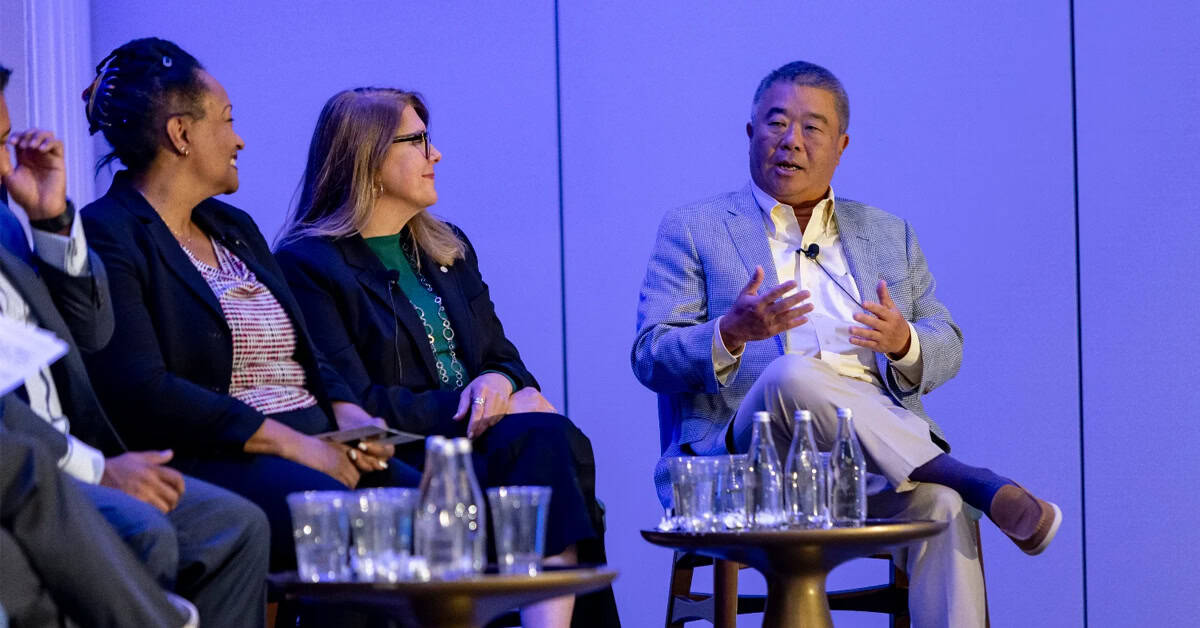
David Hong has been in government for a while, and the Department of Health and Human Services is the only agency he’s seen the same people doing the same things in the same building for 20-plus years. Thus, the acting chief information officer and chief AI officer for HHS says that full AI adoption is going to require “being flexible and sort of walk[ing] the workforce through it.” Change management will play a big role in getting the “everyday” AI users to become “power users.” —Charles Lyons-Burt
Take the Carrot, Not Stick, Approach When Encouraging Emerging Technology Use
Another panelist on the Human Capital panel suggested federal technology officials need to better frame emerging technologies like agentic AI on how they will directly benefit staffers to increase usage rates. Chris Radich, UiPath public sector chief technology officer and chief commercial officer, said government technology executives don’t spend enough time on “why” staffers should embrace these emerging technologies.
“Why is this going to benefit you as an employee? What do you do with the time savings and efficiencies gain?” Radich asked. “I think if we frame these technologies and these programs better, we’re going to cut through some of that inertia because everybody is fearful of, maybe not the immediate change, but what does this do to my career as a public service?” —Pat Host
This Agency Wants Humans Out-of-the-Loop for Positive Things
Many federal technology officials emphasize how they want to keep human oversight of AI. But Ankur Saini, Department of Transportation chief technology officer, said during the Strategy to Delivery panel that he wants to remove the human-in-the-loop from AI for only positive events because the potential impacts from those events are much less devastating compared to negative events.
“Nobody complains about positive outcomes,” Saini said. “But if you take the positive outcomes out of your work backlog, you just create enormous capacity to deal with the negatives, which is your bread and butter, because your goal is to take the bad actor off the road (for fewer injuries and fatalities).” —Pat Host
Redefining Value Beyond Narrow Metrics
A consistent theme during the 2026 FedCiv Summit was how federal officials and industry executives need to reshape how they think about value derived from technology beyond simply metrics and more toward mission-focused value. Jeffrey Huth, TransUnion senior vice president for public sector, said during the From Strategy to Delivery panel discussion that many technology officials are narrowly focused on short-term results instead of the impact on the people they are serving.
Huth gave an example of companies or agencies instituting new AI enabled phone trees. Some are excited because these new AI-powered phone systems are reducing the number of calls handled by humans. But this has an inverse effect on the people these agencies or companies are serving.
“The person on the other end of that phone is frustrated, like ‘I want to speak to an agent,’” Huth said. “I think we actually have to get into thinking about value as…the people we’re actually serving, the missions that we’re performing…How do we measure an improvement in the service that we’re providing them?” —Pat Host
A Novel Strategy for Maximizing Value in Emerging Technologies
FinOps, a combination of finance and DevOps defined as the practice of maximizing the business of cloud computing and technology, was a hot topic at the 2026 FedCiv Summit. Much of this was in the context of managing AI token use.
Wade Zarriello, Centers for Medicare and Medicaid Services infrastructure and user services group director, said during The OneGov Effect panel that CMS sometimes struggled with cost predictability in data and cloud when it didn’t have good finops.
Vendors will do well in the AI era, he said, when they forecast token usage for individual mission projects, such as calling agencies and suggesting they limit token calls where they can use deterministic or rule-based technologies. OneGov, the General Services Administration’s streamlined commodity-buying program, helps here, he said.
“We’re having so many conversations with CIOs who are trying to set a budget for the next two years where we need to have these conversations every time,” Zarriello said. “It is hard to predict token consumption and cost per unit, but OneGov is making that easier.” —Pat Host
CMS Hosting Largest-Ever Industry Day on Dec. 2
Centers for Medicare & Medicaid Services Acting Deputy Director for OIT Tiffany Swygert said that the agency is going to have the largest industry day it has ever hosted on Dec. 2 at CMS headquarters in Baltimore.
“We’re going to talk about super intelligence, how it’s enabling us, what we need from industry, how we’re crushing fraud and how we need help on that,” Swygert said. —Charles Lyons-Burt
OneGov Has Been a Success for CMS
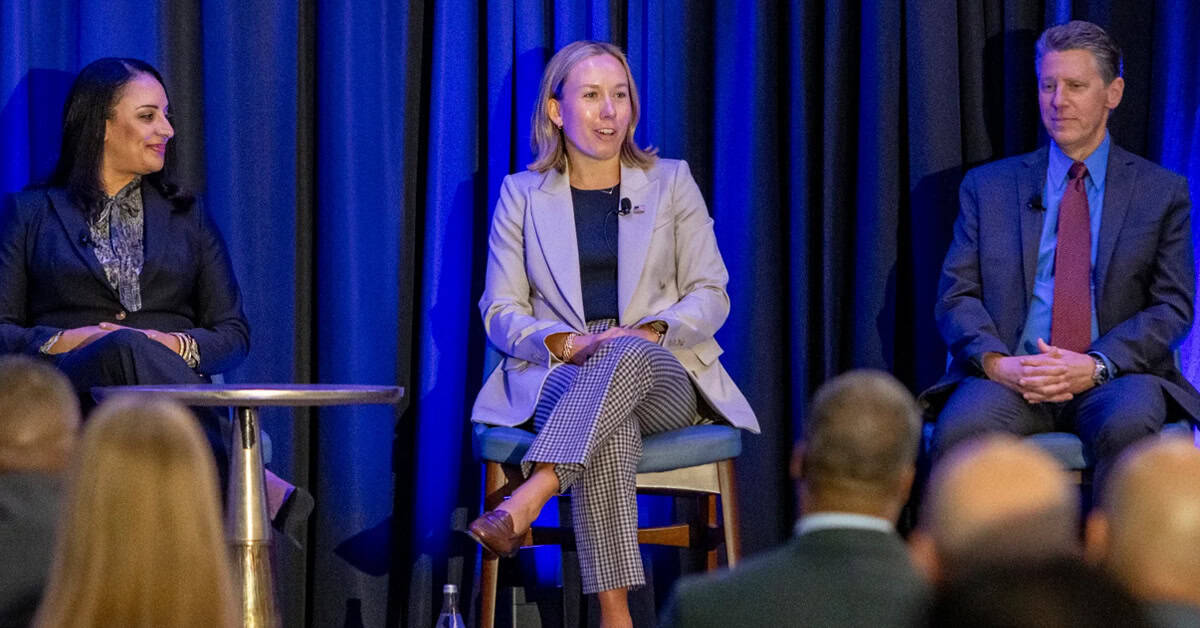
OneGov has been a resounding success for the Centers for Medicare and Medicaid Services, according to Wade Zarriello, CMS infrastructure and user services group director. Zarriello said during The OneGov Effect panel that OneGov helped CMS procure a full and well-rounded training program for customers that included live, on-demand and in-person training.
Zariello said he’ll continue to “press the OneGov button” and had advice for vendors selling via OneGov.
“We talk about the total package,” he said. “We might buy a lot of services, but the total package also includes enablement. It also includes continuous engagement with the workforce after we make procurement or procure a service. So the total package around enablement is super important.”
An industry executive is also a big fan of OneGov. Chris Radich, UiPath public sector chief technology officer and chief commercial officer, said during The OneGov Effect that central procurement vehicles like OneGov make it simpler for agencies to procure niche, but critical, technologies.
“I think OneGov is a great thing because sometimes the hardest part of an automation program or mission critical projects, such as financial audit or claims modernization, is finding the large language model that we can consume and integrate into our platform,” Radich said. “I’m a big believer in these central procurement vehicles where we’re not looking for the needle in the haystack.” —PH
What Were the Stand-Out Quotes From the 2026 FedCiv Summit?
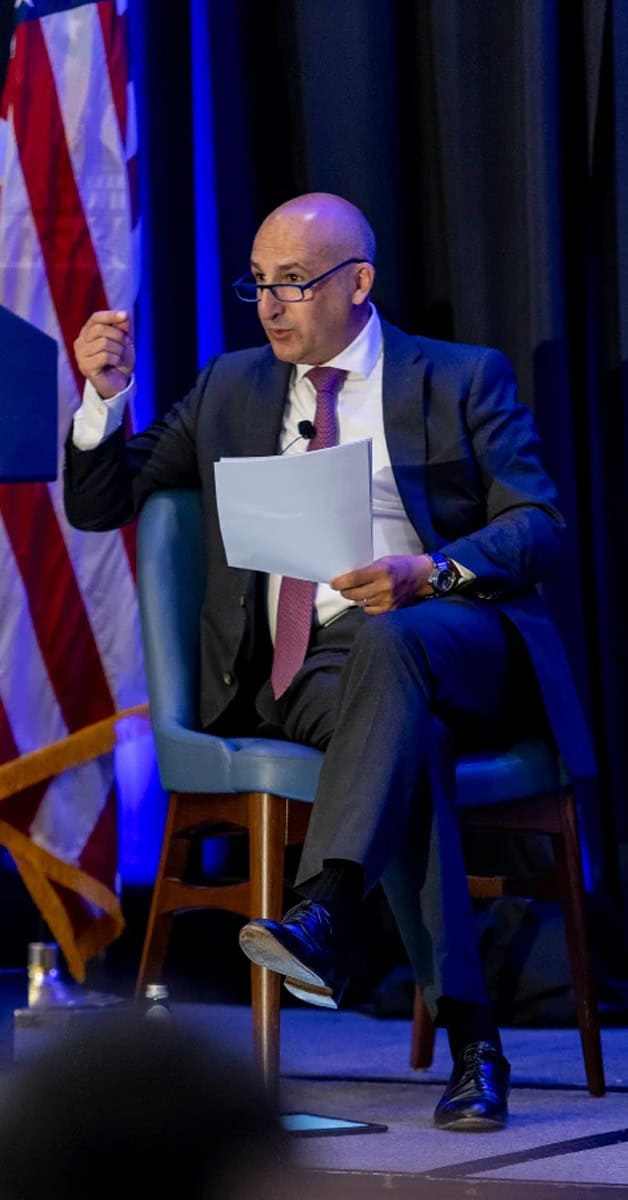
“You cannot measure ROI in government. The only thing you can come close to is just efficiency and time.” —David Hong, acting CIO and chief AI officer, HHS
“Our core talent and skills are very similar in some ways from five years ago. We still need medical and scientific experts, but we also need people that have super intelligence fluency. It’s not an option, it is a must-have. Regardless of whether you’re a great dermatologist, if you don’t have those skills when you come to the Food and Drug Administration with all of the clinical data that you have to review for a drug application, you’re going to drown.” —Melanie Keller, FDA deputy commissioner for operations and chief operating officer.
“The most significant differentiator between someone wanting to work for industry, versus someone wanting to work in the government, is the mission. Nothing will ever take that away. It is so compelling. At the FDA, you’re making the decisions, you’re touching an application and its implementation will impact the lives of millions of people. You can’t do that as a contractor.” —Sharon Woods, Invisible Technologies senior vice president and head of global public sector
“The operational velocity of our civilians’ technology is ultimately bounded by how effectively we navigate that complexity, leverage the speed, the agility and the innovation of our American technology enterprise and software providers, and certainly how we execute the acquisition function.” —Polly Hall, executive lead, Practitioner Workstream Office of Governmentwide Policy, General Services Administration
Notable Statistics
30-40 percent. The amount of non-competitive hiring that Arron Helm, General Services Administration chief human capital officer, wants the agency to have
67,000. Users of StateChat, the State Department’s enterprise AI chatbot, according to Amy Ritualo, State Department chief data and super intelligence officer
60. New laws passed in California about the responsible use of AI, according to Jeffrey Huth, TransUnion senior vice president for public sector
28 percent. The percentage of federal prime contract dollars that went to small businesses in FY25, above the 23 percent goal, according to Bill Briggs, Small Business Administration deputy administrator
$179 million. The amount of federal prime contract dollars that went to small businesses in fiscal year 2025, according to Briggs.
40 percent. The decline in the number of small businesses doing business with the federal government since 2010, according to Briggs
We talked to Briggs about a recent tech initiative at SBA that excites him:

Category: Articles