How AI Is Transforming the Army’s Future Battlefield Strategy
Artificial intelligence is rapidly becoming one of the Army’s most important modernization priorities as military leaders race to accelerate decision-making, streamline operations and prepare for increasingly contested battlefields.

From autonomous systems and AI-enabled command-and-control to predictive logistics and acquisition automation, the service is investing heavily in technologies designed to help soldiers operate faster and smarter than adversaries. Initiatives like Project ARIA and NGC2 highlight how the Army is reshaping warfare around data, autonomy and operational speed — creating major implications for the defense industrial base and government contractors supporting next-generation mission capabilities.
The 2026 Army Summit on June 18 will provide GovCon executives with direct access to the leaders shaping the future of military innovation. The event will bring together senior Army officials, AI experts, technologists and defense industry leaders to examine how AI, autonomous systems, electronic warfare and operational speed are transforming land power and modernization priorities across the defense industrial base. Register today.
How Is the Army Currently Using AI?
The Army is rapidly integrating AI across operational, acquisition and enterprise environments as part of its broader modernization strategy. From autonomous systems and logistics management to command-and-control modernization and acquisition acceleration, AI is becoming a critical enabler of operational speed and decision advantage.
Army leaders are increasingly focused on applying AI to improve decision speed, the ability to process information and act faster than adversaries in increasingly data-saturated environments. The Army is already piloting AI-enabled tools within acquisition environments. Under Army Contracting Command’s Smart Contracting Initiative, AI prototypes are helping acquisition teams automate the development of acquisition requirement packages, reducing processes that once took weeks down to hours or even minutes.
Meanwhile, the Army is investing heavily in Next Generation Command and Control, or NGC2, architectures that connect sensors, networks and decision-makers across domains using integrated data-centric systems.
What Is NGC2?
NGC2 is the Army’s top modernization priority and serves as the foundation for the service’s future AI-enabled battlefield operations.
NGC2 is designed to replace legacy command-and-control systems with a more integrated, data-centric architecture capable of connecting sensors, shooters and commanders across domains in near real time. The Army requested nearly $4 billion for NGC2-related procurement and research activities in fiscal 2027.
The initiative includes investments across:
- C2 applications and software
- Data integration and analytics
- Transport and communications infrastructure
- Continuous integration and deployment pipelines
- Tactical and enterprise-level networking
The Army is already prototyping NGC2 “full-stack” capabilities with operational divisions, including the 4th Infantry Division.
NGC2 is positioned to play a central role in enabling AI-powered operations by creating the resilient data infrastructure necessary for faster operational decisions and integrated battlefield awareness.
How Will the Army Harness AI for the Future?
The Army’s future AI strategy is centered on operational speed, human-machine teaming and scalable decision-making across contested environments.
Army modernization leaders increasingly recognize that future conflicts will be defined by overwhelming data volumes, autonomous systems and compressed decision timelines. To maintain battlefield superiority, the service is investing in AI-enabled analytics, edge computing, integrated sensor orchestration and resilient mission networks capable of operating from enterprise headquarters to the tactical edge.
A major part of that effort is Project ARIA, or Army Rapid Implementation of Artificial Intelligence, which was launched to rapidly deploy practical AI capabilities across operational and enterprise environments. Through initiatives like Team Gray, Team Black and Team Yellowstone, Project ARIA is applying AI to budgeting and planning processes, tactical-edge AI deployment and predictive logistics and maintenance operations.
The Army is also strengthening partnerships with industry and research organizations to accelerate AI innovation. DEVCOM Army Research Laboratory recently entered into a Cooperative Research and Development Agreement with Greystones Group to advance AI-enabled data orchestration, automation and decision-support capabilities across live, virtual and constructive training environments.
In addition, the Pentagon is seeking nearly $30 billion in fiscal 2027 funding to modernize AI supercomputing infrastructure and expand highly secure data centers under its new “AI Arsenal initiative.”
What Is Project ARIA?
Project ARIA is the Army’s newest initiative focused on rapidly deploying practical AI capabilities across operational and enterprise environments. Announced in March 2026, the initiative aims to modernize Army operations while reducing administrative burdens on soldiers and civilians.
Project ARIA was launched following a successful AI tabletop exercise hosted by Army Secretary and Wash100 Award winner Daniel Driscoll in September 2025, where Army leaders collaborated directly with industry AI experts to solve operational challenges.
As mentioned, the initiative currently includes three core teams:
- Team Gray, which is building agentic AI tools to automate the Army’s planning, programming, budgeting and execution process
- Team Black, which is developing a “model armory” capable of delivering AI capabilities from data centers to the tactical edge
- Team Yellowstone, which is applying AI to supply chain management and predictive maintenance at Anniston Army Depot
Army leaders say Project ARIA represents a major shift toward faster and more agile technology development cycles by partnering directly with leading AI firms to deliver solutions in months instead of years.
Learn More About How AI Is Transforming the Army at the 2026 Army Summit
As AI reshapes command-and-control systems, acquisition processes and battlefield operations, the 2026 Army Summit will provide GovCon executives with direct access to the leaders and innovators driving the Army’s digital transformation.
The summit will host a panel titled, From Data to Decision: How AI Is Transforming the Army Today, featuring COL (Ret.) Joel Babbitt, Andrew Evans, CW4 Reginald Oliver, Jonathan Moak and John Osborne, government and industry leaders examine the future of AI-enabled warfare.
Attendees will gain valuable insight into how the Army is applying AI to accelerate decision-making, modernize acquisition, improve battlefield awareness and support next-gen operational concepts. The event will also explore the data, networking and cybersecurity challenges associated with deploying AI-enabled capabilities at scale.
For contractors supporting AI, cloud computing, autonomy, cybersecurity, command-and-control and mission systems integration, the 2026 Army Summit offers a critical opportunity to engage directly with decision-makers shaping the future of Army modernization. Reserve your seat now.
Find out more about our industry-leading panel participants:
Andrew Evans
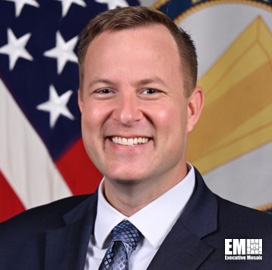
Director, Strategy and Transformation, DCS, J-2
U.S. Army
Andrew Evans serves as director of strategy and transformation within the Office of the Deputy Chief of Staff for Intelligence, where he leads the Army’s intelligence strategy and technology transformation initiatives. In this role, he oversees efforts to modernize the Army Intelligence Enterprise, evaluate investment effectiveness and enhance operational lethality and readiness across a globally engaged force.
Before assuming his current position in 2025, Evans served as director of the Army ISR Task Force, where he managed modernization efforts across the Army’s Intelligence and Security Enterprise. He played a key leadership role in advancing the High Accuracy Detection and Exploitation System, or HADES, initiative — the Army’s largest aerial intelligence, surveillance and reconnaissance modernization effort. Under his leadership, the Army Intelligence and Security Enterprise secured more than $1 billion in additional funding to support modernization and force optimization initiatives.
CW4 Reginald Oliver
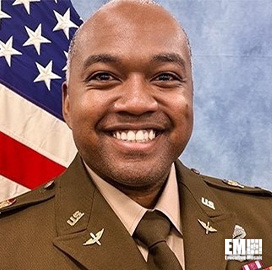
Chief Digital Transformation Officer, Capability Program Executive, Aviation
U.S. Army
CW4 Reginald Oliver serves as the chief digital transformation officer for Capability Program Executive Aviation, where he leads enterprise-wide digital transformation initiatives focused on advancing aviation modernization, AI integration and sustainment innovation across Army aviation systems. In his role, he serves as a primary advisor on artificial intelligence and sustainment strategies supporting operational readiness and modernization efforts.
Oliver brings more than 15 years of Army aviation experience spanning maintenance operations, aviation sustainment, quality control and deployment support across combat and training environments. Prior to becoming CDTO in 2026, he served as the Primary Advisor for AI and Sustainment within CPE Aviation and worked closely with the U.S. Army Artificial Intelligence Integration Center on implementing AI applications for aviation readiness.
John Osborne

HQDA G2 Senior Science and Technology Advisor
U.S. Army
John Osborne serves as the senior science and technology advisor within the Headquarters Department of the Army G-2, where he supports intelligence modernization and advanced technology initiatives across the Army Intelligence Enterprise. In his current role, he provides strategic guidance on emerging technologies, intelligence capabilities and science-and-technology integration supporting future Army operations.
Before joining HQDA G-2 in 2024, Osborne served as ISR Task Force science and technology lead and director of intelligence modernization at Intrepid Solutions and Services, supporting Army intelligence transformation efforts.
COL (Ret.) Joel Babbitt

VP, Army & SOCOM Programs | Former PEO, Special Operations Forces – Warrior Systems, USSOCOM
Seekr
COL (Ret.) Joel Babbitt serves as vice president for Army and SOCOM programs at Seekr, where he supports defense modernization initiatives focused on AI, tactical networking and mission systems innovation for military and national security customers.
Before joining Seekr, Babbitt served as program executive officer for Special Operations Forces – Warrior Systems at U.S. Special Operations Command, overseeing 10 joint program offices with a combined annual budget of approximately $1.8 billion. Throughout his Army acquisition career, he managed more than $4 billion in defense programs and played a key role in advancing tactical communications, command-and-control and network modernization capabilities for the Army and special operations forces.
Babbitt is widely recognized for helping deliver the Army’s first “flying command post” to the XVIII Airborne Corps, bringing secure Wi-Fi to tactical command posts and modernizing the Army’s tactical network infrastructure.
Jonathan Moak

Senior Vice President, U.S. Public Sector Sales
Exiger
Jonathan Moak serves as senior vice president for U.S. public sector sales at Exiger, where he leads the company’s go-to-market and revenue teams supporting government and defense customers. With more than two decades of experience across the public sector and defense markets, he focuses on driving transformative technology and mission outcomes for federal agencies.
Before joining Exiger, Moak served as acting assistant secretary of the Army for financial management and comptroller following a presidential nomination. In that role, he oversaw the Army’s $183 billion financial management enterprise and led development of the service’s first Finance Strategy.
Attendees of the 2026 Army Summit will also hear from the assistant secretary of the Army for financial management and comptroller during a keynote address examining how the service is aligning modernization investments, acquisition priorities and digital transformation efforts to support the Army’s future force.


Category: Articles