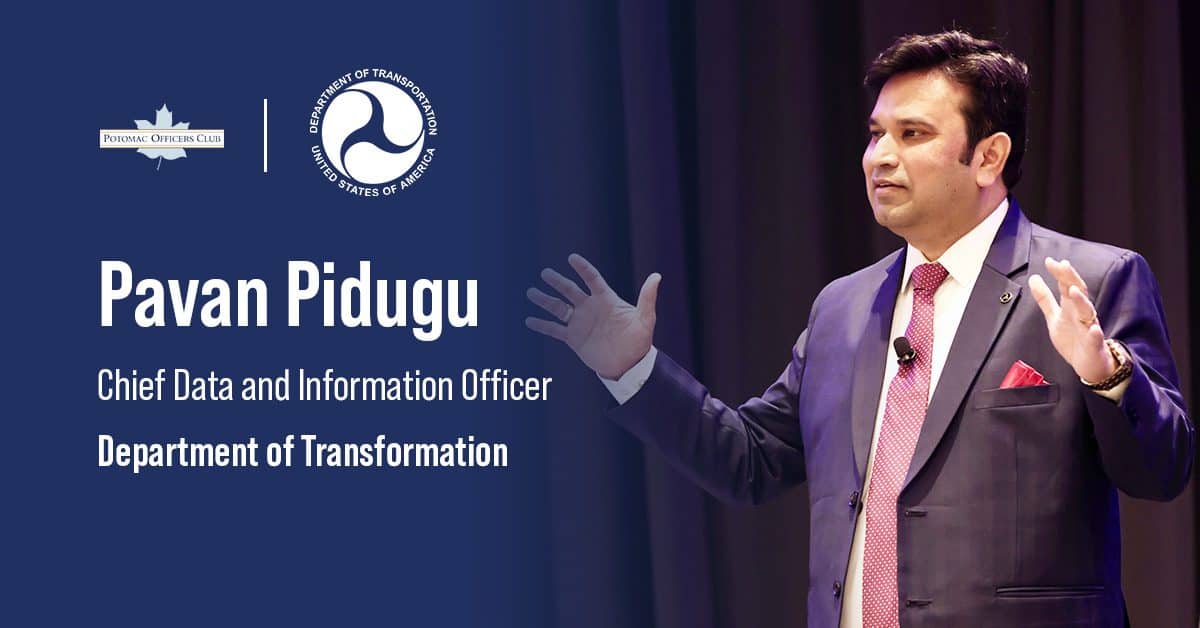
Why Tech Is the Easy Part of Agency Transformation, According to DOT CDIO Pavan Pidugu
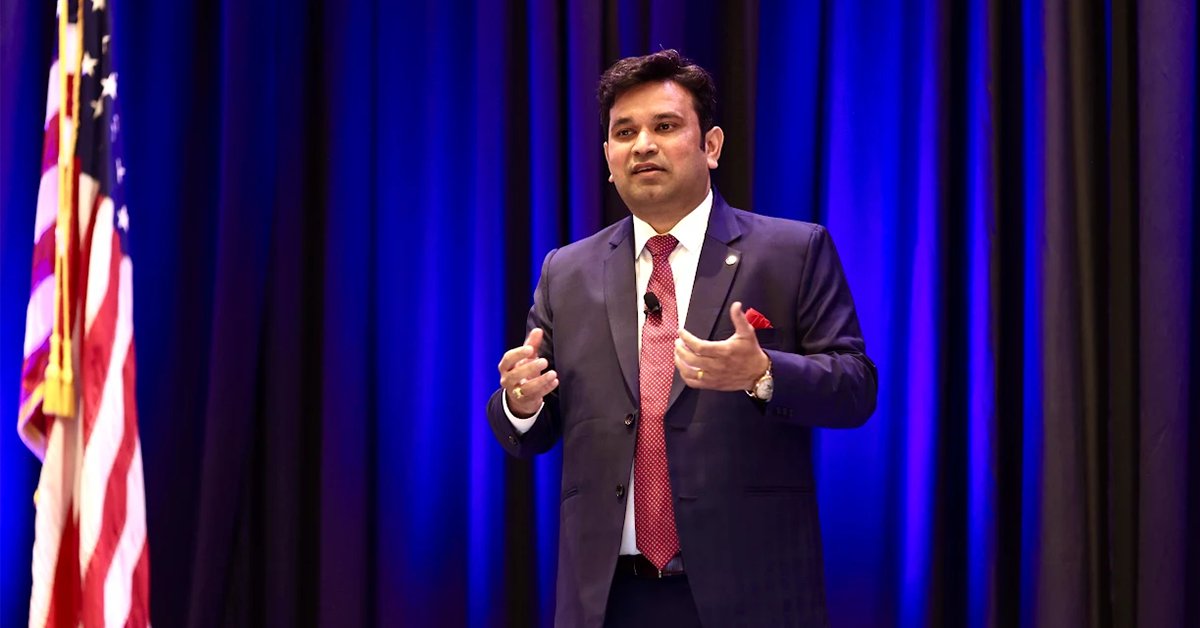
The U.S. Department of Transportation is undergoing a sweeping shift in how it approaches digital transformation, prioritizing execution, speed and enterprise-wide integration over long-term planning cycles, Chief Digital and Information Officer Pavan Pidugu said during his opening keynote at Potomac Officers Club’s 2026 Digital Transformation Summit on Wednesday.
Speaking to an audience of government contracting executives, Pidugu emphasized that transformation is as much about mindset as technology. “The tech is the easiest part,” he said, noting that real progress depends on changes to “our people” and “our processes in building those technology products.”
If you want to gain additional insights from top federal IT executives, register for the 2026 Cyber Summit on May 21 where officials from DOW, Office of Management and Budget, Defense Information Systems Agency, Air Force, Department of Education, FBI and the White House will be speaking directly to GovCons in keynote and panel forums with Q&A and 1:1 opportunities.
How Is DOT Restructuring for Enterprise-Wide Digital Transformation?
At the center of DOT’s strategy is its “OneDOT” vision, which seeks to unify operations, data and technology across all transportation modes, including aviation, highways, rail and maritime.
“How do we unify that much strength and the cross leverage between the modes of transportation?” Pidugu said, describing the challenge of aligning historically siloed organizations.
To address this, the department has undertaken a significant restructuring effort, consolidating IT organizations into a centralized OCDIO office.
“We have ensured that there is no longer a shadow IT within the DOT,” Pidugu said, noting that all technology decisions are now evaluated through a unified governance model.
DOT has also reorganized its workforce into shared services and digital factories, which function as product development hubs aligned to mission areas. These factories are responsible for building scalable software solutions while coordinating across the enterprise to avoid duplication.
This restructuring supports a broader push to simplify the department’s technology landscape. Pidugu pointed to the proliferation of redundant systems as a key issue, noting that DOT has hundreds of applications performing similar functions. The goal is to move toward standardized platforms using a “one-product-per-job” model to reduce costs and improve maintainability.
Speed and execution are central to this effort.
“We don’t want to do any projects that are years long,” Pidugu said. “If we can’t deliver in three to six months, we drop the idea.” This approach reflects a broader cultural shift toward rapid iteration and measurable outcomes.
What Are DOT’s Priorities for Data, AI and Execution?
Pidugu identified data as one of DOT’s biggest opportunities and challenges.
“We have lots of data, but we don’t know what to do with that data,” he said, describing a fragmented environment where information is spread across multiple systems and often difficult to access.
For example, answering basic questions about grant funding can require pulling information from numerous systems.
“We have up to 14 systems… when you don’t even know how to qualify what systems you have and which information is accurate, it takes a lot of time,” he said.
To address this, DOT is working to unify data environments and build platforms that provide real-time, decision-ready insights. The department is also embedding AI across its operations, but with a measured approach.
“We’re not running behind flashy technologies,” Pidugu said. Instead, DOT is focused on identifying a problem and applying AI where it delivers clear value.
Pidugu also highlighted the importance of improving user experience for frontline personnel. He shared an example of a roadside safety inspector who had to log into multiple systems to complete a single task.
“She had to log into eight different applications… on the side of the road,” he said, calling the situation unacceptable. DOT is now working to streamline similar workloads into intuitive, integrated tools.
Drawing on his commercial background at well-known organizations like Walmart and Target, Pidugu is committed to user experience for all DOT employees across their diverse ecosystem of air, land, sea and rail travel.
How Is DOT Solving the Tension Between Security and Innovation?
Cybersecurity remains a critical priority for DOT as well.
“We are making sure that the frameworks that we are using in our cyber are modern, but at the same time, the important thing to know is cybersecurity or the framework should not hinder innovation,” Pidugu said, emphasizing the need for continuous improvement while maintaining secure systems.
This includes efforts to streamline traditionally lengthy processes such as authority to operate, or ATO, timelines, which have historically slowed deployment of new capabilities. By modernizing these processes and aligning them with agile development practices, DOT aims to ensure that security is embedded into systems from the start, rather than layered on at the end, allowing innovation to move forward without unnecessary delays.
Ultimately, Pidugu reinforced that balancing security and innovation comes down to execution.
“Transformation is beyond strategy. It’s beyond vision. It is the ability to execute,” he said, underscoring the need for agencies to operationalize both priorities simultaneously through disciplined processes, clear accountability and measurable outcomes.
For those at the intersection of IT transformation and cybersecurity and seeking to get in front of government buyers, the upcoming 2026 Cyber Summit on May 21 is your next opportunity to engage with top government officials including Acting Principal Deputy CIO and DOW CISO Aaron Bishop and DOW Assistant Secretary for Cyber Policy Kathrine Sutton.
What Are the Key GovCon Takeaways From Pidugu’s Keynote?
Pidugu’s message to government contractors centered on partnership, speed and mission alignment, signaling a shift in how DOT intends to engage with industry.
He emphasized that the department’s new operating model, built around shared services and digital factories, creates clearer entry points for collaboration.
“We have restructured our entire office… we now have a shared services… [and] our digital factories,” Pidugu said, explaining that their four digital factories are aligned to specific business areas and responsible for delivering mission-focused solutions.
Each factory is accountable for both execution and coordination across the enterprise.
“Each of the factories will be responsible for specific areas of businesses,” he said, adding that leaders within those factories serve as primary partners for industry while also ensuring solutions are scalable across DOT.
This structure reinforces DOT’s push to eliminate duplication and standardize capabilities. Using grants systems as an example, Pidugu noted, “We don’t want all four factories building grant solutions. We want one grant solution,” underscoring the department’s expectation that industry solutions support enterprise-wide use cases rather than siloed deployments.
For contractors, the most direct takeaway is a shift away from traditional vendor relationships toward outcome-driven partnerships.
“I’m not interested in vendors. I’m interested in talking to partners that know our problem,” Pidugu said, calling for deeper understanding of agency mission needs and challenges. He also made clear that speed-to-value is a critical requirement.
“Come with the roadmap of how we can actually realize a value creation in a three to six months’ timeframe,” he said, reinforcing DOT’s expectation for rapid delivery and measurable impact.
Taken together, these priorities signal that success in the DOT market will depend on the ability to deliver targeted, scalable solutions quickly, while aligning closely with the department’s challenges and enterprise strategy.

Category: Articles