NASA Is Putting Billions in Contracts Up for Bid: Opportunities GovCons Should Know
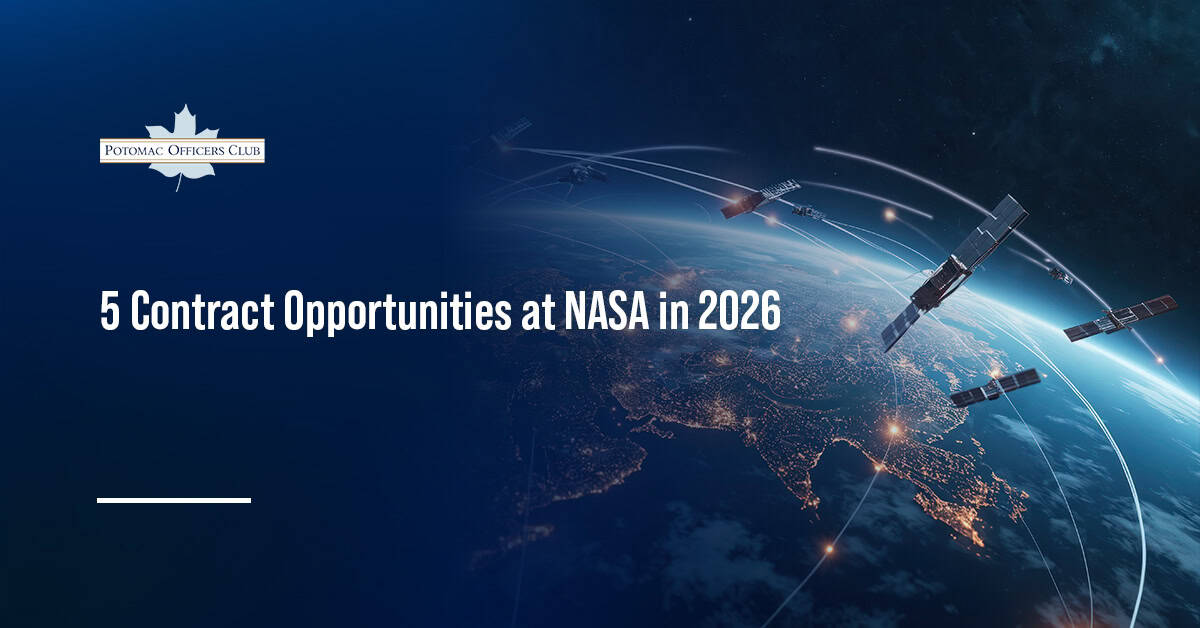
- NASA has multiple active space mission contract opportunities, including the Commercial LEO Destinations RFP, the Project NEXUS solicitation to replace the aging TDRSS constellation and a JPL spacecraft camera architecture RFI
- NASA is also competing the ESSCA II hybrid IDIQ vehicle worth up to $3.25 billion for engineering and science services and management of JPL
- NASA leaders Matt Anderson and Greg Heckler will share insights into agency requirements and priorities at the 2026 Air and Space Summit on July 30
NASA is broadening collaboration with partners from the commercial sector to support its missions.
The Artemis program, which intends to put humans on the moon for the first time since the 1970s, demonstrates NASA’s increasing shift toward commercial innovation. The agency has opted to acquire key technologies, such as spacesuits and lunar landers, from commercial partners.
This pivot creates opportunities for the government contracting sector to support missions that push the boundaries of space exploration or strengthen defense and national security.
NASA Deputy Administrator Matt Anderson will deliver a keynote at the Potomac Officers Club’s 2026 Air and Space Summit on July 30. He is expected to discuss NASA’s science and space programs, expanding private-public partnerships, and the space agency’s role in supporting defense and national security missions. Tickets are limited, so sign up while you can!
What Are the Open Contract Opportunities at NASA Right Now?
Spacecraft Camera Requirements for Diverse Mission Applications RFI
The Jet Propulsion Laboratory is conducting market research on camera requirements for a wide range of applications, including science imaging, proximity operations and docking, autonomous navigation, and engineering monitoring.
In an RFI posted on SAM.gov, JPL said the effort aims to demonstrate a flexible camera architecture that can support different missions and reduce the development cost and risk associated with custom technologies.
The camera must adhere to open standards and must be compatible with commercial image and video processing software.
NASA wants spacecraft operators, mission planners and system integrators to provide sample requirements for cameras for specific use case scenarios. Responses are due July 23.
LEO Destination Draft RFP
 NASA has posted a draft request for proposals for the next phase of its commercial space station initiative to replace the International Space Station, which is expected to reach its operational end of life in 2030.
The commercial space station project, known as Commercial LEO Destinations, is intended to ensure a sustained human presence in the low Earth orbit, facilitate experimentation in microgravity and support commercial space activities.
The draft RFP, published on July 6, builds upon a request for information issued on SAM.gov in March. In the RFI, NASA presented industry with two options: a direct-to-commercial approach and an incrementally phased transition.
The direct-to-commercial approach is similar to the space agency’s original plan to be one of many commercial space station customers.
The alternate approach will introduce a NASA-owned core module that would be attached to the ISS. According to the agency, the approach will enable “continued participation from multiple providers and a continued competitive drive to grow the commercial market.”
Based on the RFI response, NASA will proceed with its original plan to acquire commercial services via full and open competition. The space agency will award firm-fixed-price, indefinite-delivery/indefinite-quantity contracts to support development and certification of future commercial space station services.
“NASA’s review reflects what we’ve been hearing from industry throughout this process. Industry believes it can meet the timelines and that a viable commercial marketplace exists where NASA is one customer among many,” NASA Administrator Jared Isaacman, a 2026 Wash100 winner, stated. “We’re focused on supporting those efforts, enabling the capabilities that make this transition possible, and doing all we can to ensure the United States maintains a continuous human presence in low Earth orbit.”
NASA is requesting industry to review and comment on the draft RFP on or before July 27.
NEXUS Ka Band Backward-Compatible Relay Final Solicitation
NASA is soliciting proposals for an end-to-end commercial relay capability that can operate in the Tracking and Data Relay Satellite System, or TDRSS, frequency bands. TDRSS is a constellation in geosynchronous orbit that delivers near-continuous information relay services to space missions, including the ISS.
TDRSS has been operational since the 1980s, and the system is now facing obsolescence. Without a replacement, on-orbit missions risk losing telemetry, tracking and command service.
However, the challenge of replacing TDRSS is backward compatibility. Legacy government spacecraft rely on specific TDRS waveforms and frequency bands, and these missions cannot be modified to work with new architectures.
NASA requires a Ka band relay capability that supports legacy TDRS-compatible users with no modifications to spacecraft. The agency is pursuing this capability through Project NEXUS, a subproject under the Space Communications and Navigation, or SCaN, program.
NASA aims to begin on-orbit demonstrations by late 2028, incremental sustained service starting in 2029 and operational capability by mid-2031. Proposals are due July 21.
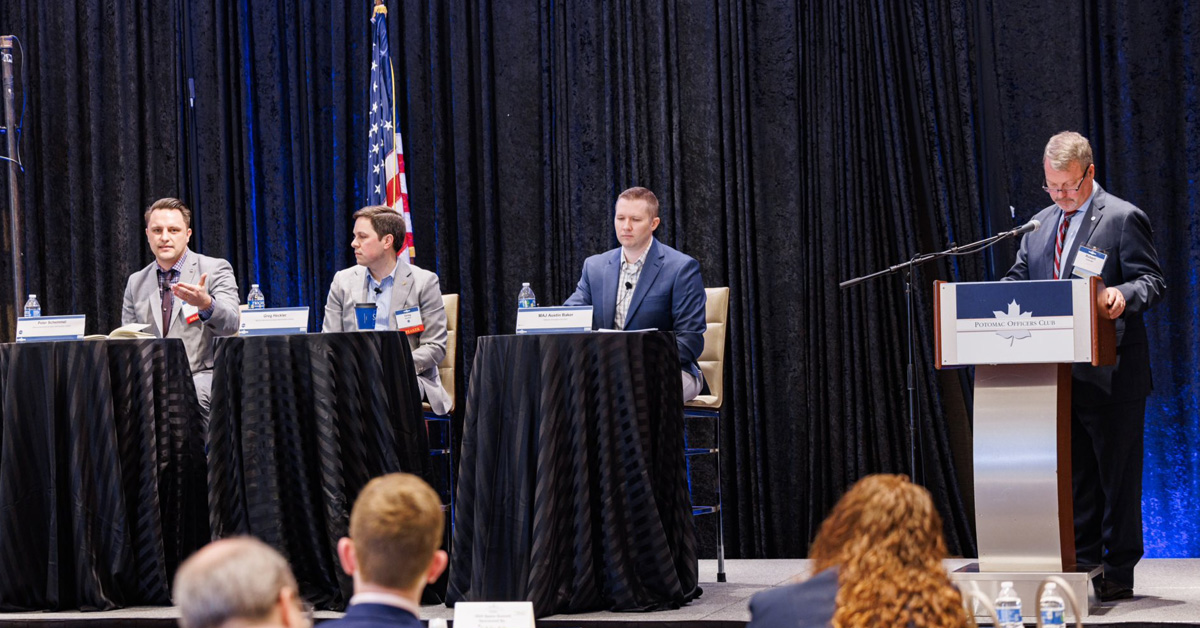
Greg Heckler, deputy program manager for capability development for the SCaN program, will join the Commercial Space Relay: Achieving Speed to Mission panel at the Potomac Officers Club’s 2026 Air and Space Summit on July 30. He will talk about interoperability, hybrid architectures in orbit and NASA’s transition to commercial relay. Get your tickets here to join the conversation!
ESSCA II Final RFP
NASA has issued the final RFP for its Engineering Services and Science Capability Augmentation, or ESSCA, II contract, a hybrid IDIQ vehicle providing engineering and science skills augmentation to Marshall Space Flight Center, Michoud Assembly Facility, Stennis Space Center, NASA Headquarters and other centers. The contract’s maximum potential value is $3.25 billion.
Work will cover research and development activities supporting guided missiles, space vehicles and propulsion systems. The contract includes a four-month phase-in, a five-year base ordering period and an optional three-year extension.
ESSCA II follows the original ESSCA contract, a five-year, $1.1 billion award Jacobs won in 2019 to deliver environmental engineering and technical services at Marshall Space Flight Center.
Proposals are due Aug. 6.
Jet Propulsion Laboratory Management Recompete
NASA has announced that it plans to compete a contract for the operation of JPL, a research and development center located in California.
The California Institute of Technology has been managing the laboratory since the 1930s and has secured multiple sole-source contracts over the years to oversee the facility. Its current contract for JPL’s management has a potential maximum value of $30 billion and runs through 2028.
“As America’s space economy evolves, we have a responsibility to the American people and the scientific community to evaluate how we can execute faster, operate more efficiently and continue to deliver world-class science and engineering at the highest level,” Isaacman said in a press release. “The decision to compete this contract reflects NASA’s commitment to strong stewardship of taxpayer resources and positions Jet Propulsion Laboratory to continue driving world-changing scientific discovery and technological innovation for decades to come.”
NASA did not provide a timeline for an official RFP release.
Where to Discover More NASA Contract Opportunities
The Potomac Officers Club’s 2026 Air and Space Summit on July 30 is the prime destination for GovCons looking to identify and pursue contract opportunities at NASA.
- Matt Anderson’s keynote will provide insights into the evolving priorities at NASA. His speech will touch on the agency’s biggest initiatives, including the Artemis program and the Commercial LEO Destinations, and future programs.
- The Commercial Space Relay: Achieving Speed to Mission panel, featuring Heckler and other government and industry leaders, will provide insights on how NASA will transition from government-owned relay infrastructure to commercially provided space communications services.
- Each session allows attendees to directly ask questions to speakers to gain a deeper understanding of mission requirements.
- The summit’s networking sessions give attendees opportunities to connect with and potentially forge partnerships with contractors from the defense and space industry to strengthen teaming arrangements and pursue upcoming NASA solicitations.
Don’t miss this excellent opportunity for GovCon relationship-building. Save your spot now!

Category: Articles