2026 FedCiv Summit: 5 Outstanding Outcomes for GovCons
- CIOs & CTOs from CBP, DOL, HHS, DOT and more will speak in person the Oct. 29 event
- AI is the central focus in five of the 2026 FedCiv Summit‘s seven panel discussions
- New SBA defense programs open doors for small DIB firms
Federal civilian agencies are being asked to deliver more with leaner teams, and technology is how they plan to do it. From GSA’s OneGov push to streamline software buying to the Department of Energy’s Genesis Mission to accelerate scientific discovery with AI, civilian agencies are rethinking how they operate.
The White House is backing that shift with a record $75.7 billion IT budget request for civilian agencies in fiscal year 2027, up nearly $8 billion from FY 2026, FedScoop reported. The officials steering that investment are taking the stage at the Potomac Officers Club’s 2026 FedCiv Summit on Oct. 29 at the Ritz-Carlton, Pentagon City in Arlington, Virginia.
For contractors whose portfolios have centered on the Department of War, the 2026 FedCiv Summit is a chance to see exactly where civilian agency priorities line up with the capabilities they already deliver. For established FedCiv players, it’s a full day of keynotes, panel discussions and networking with the leaders behind the next wave of agency modernization.
Register now to secure your seat at the 2026 FedCiv Summit!
Here are five outcomes GovCons can count on taking home from the event.
What Outcomes Can GovCons Expect From the 2026 FedCiv Summit?
1. A Clear Read on Where FY 2027 IT Dollars Are Headed
The $75.7 billion IT request represents a massive opportunity for the industrial base. The 2026 FedCiv Summit will show contractors how individual agencies plan to put their share to work.
Several of the event’s speakers oversee the enterprise operations and investments behind that spending:
- David Hong, acting chief information officer and chief AI officer at the Department of Health and Human Services
- Melanie Keller, deputy commissioner for operations and chief operating officer at the Food and Drug Administration
- Andrea Brandon, associate director of the Office of Enterprise Management at the Department of the Interior (panelist)
With $9.5 billion requested for its IT programs, HHS ranks among the largest civilian technology investors in the FY 2027 budget, making Hong’s insight especially valuable. Hong and Brandon will appear together on the Digital Labor in the Workforce of Tomorrow panel, where they will likely discuss how their departments are directing automation and AI investments. Keller joins the Human Capital at the Speed of Mission panel and will likely discuss how FDA is equipping its workforce with the tools to deliver on its mission.
Walk away from the 2026 FedCiv Summit knowing which programs are poised for growth and how to position your offerings before solicitations drop. Reserve your spot today!
2. Agency Tech Priorities Straight From the C-Suite
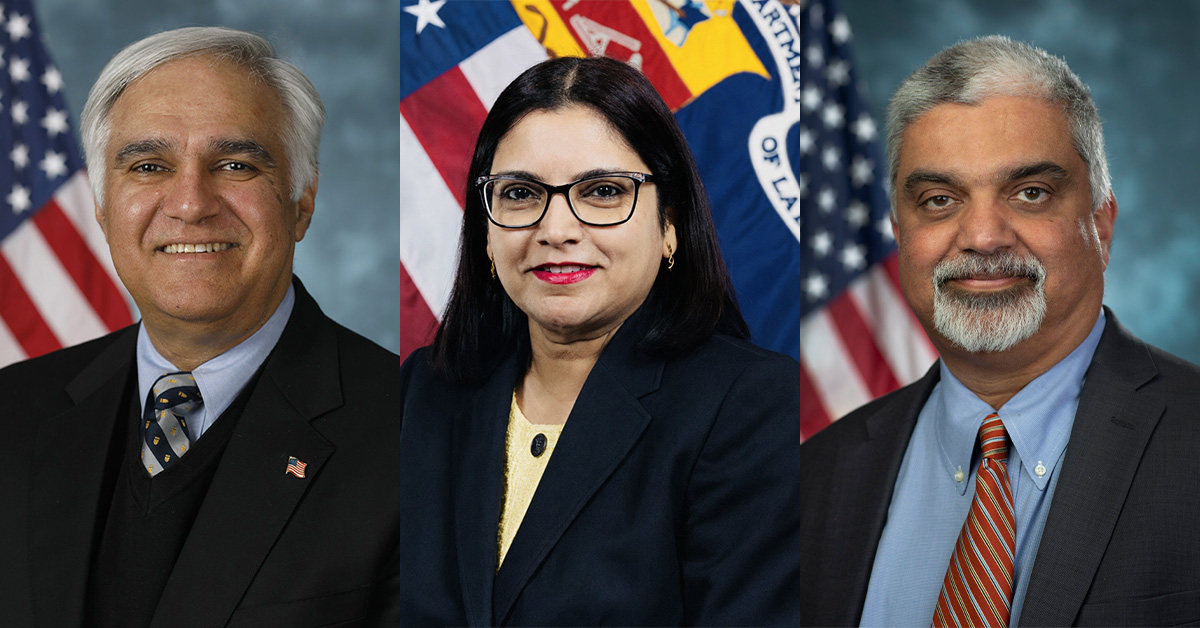
Few events put this many federal technology chiefs in one room. The 2026 FedCiv Summit‘s keynote lineup features three current CIOs and CTOs:
- Sonny Bhagowalia, CIO of U.S. Customs and Border Protection and Wash100 Award winner
- Mangala Kuppa, CIO of the Department of Labor
- Sunil Madhugiri, CTO of CBP
These leaders will likely discuss their agencies’ modernization roadmaps, cybersecurity priorities and plans for scaling AI across their enterprises.
The panel discussions add even more technology leadership.
- Ankur Saini, CTO of the Department of Transportation, will appear on the Strategy to Delivery: Modernizing Federal Civilian IT Through AI for Mission Impact panel
- Amy Ritualo, the State Department‘s chief data and AI officer will speak alongside Saini during the same session
- David Hong, acting CIO and chief AI officer for the Department of Health and Human Services is set to speak during the Digital Labor in the Workforce of Tomorrow session.
Hear these priorities firsthand and align your capture strategy accordingly. Register for the 2026 FedCiv Summit now!
3. A Practical AI Playbook for Federal Civilian Work
AI is the common thread of the 2026 FedCiv Summit, running through five of the event’s seven panel discussions. Each one pairs agency officials with industry leaders, so attendees hear both the government’s needs and how vendors are meeting them:
- Digital Labor in the Workforce of Tomorrow: CGI Federal Vice President Karim Fadel moderates a conversation with Hong, Brandon, Basia Sall, director of the Nuclear Regulatory Commission’s Data, AI, Technology and Applications Division; Amazon Web Services FedCiv AI leader Kevin Meredith and Glean founder Tony Gentilcore.
- The OneGov Effect: Leveraging AI to Accelerate Agency Modernization and Migration: Chris Martin, AWS senior services manager for federal civilian, leads Rick Miner, acting assistant CIO for satellites at the National Oceanic and Atmospheric Administration; Wade Zarriello, director of the Infrastructure and User Services Group at the Centers for Medicare and Medicaid Services; Chris Radich, public sector chief technology officer at UiPath; and AWS sales leader Shaan Uppal.
- From Strategy to Delivery: Precise Software Solutions Vice President and CIO Sohail Chaudhry guides State Dept.’s Ritualo and TransUnion Senior Vice President Jeffrey Huth through the move from AI pilots to mission results.
- Connecting the Mission: Kpler economist Reid l’Anson moderates a discussion on AI, interoperability and trusted information sharing with Tiffany Swygert of CMS, Emily Burdick of the Department of Energy and Richard Miller of Nokia Federal Solutions.
- The OneGov Effect: Competing When AI Becomes a Commodity: Over lunch, Fadel and Jon Taylor of Cato Networks will likely discuss how integrators and software firms can stand out as agencies gain easier access to foundation models through GSA’s discounted, consumption-based agreements, with a focus on mission-specific workflows, integration, training, security and measurable outcomes.
Across these sessions, speakers will discuss AI-driven assessment of legacy IT portfolios, digital labor and robotic process automation, and the data foundations agencies need before AI can scale. Bring your questions to the interactive Q&A portions and leave with concrete insight into what agencies want to buy.
Don’t miss the AI conversation at the 2026 FedCiv Summit. Save your seat!
4. An On-Ramp From Defense Into Civilian Agency Work
The line between defense and civilian contracting is getting thinner, and the 2026 FedCiv Summit gives Department of War contractors a direct look at where their experience transfers.
The Small Business Administration is a prime example. In August, SBA launched the Smaller War Plants Commission, a partnership with the Department of War that pairs loan guaranties of up to 90 percent with targeted investment and contracting opportunities for small manufacturers in priority sectors. Those sectors include munitions, unmanned aircraft systems, microelectronics, critical minerals and shipbuilding components.
SBA Deputy Administrator Bill Briggs delivers a keynote at the 2026 FedCiv Summit, where he will likely discuss the agency’s size standards overhaul, what it means for small defense industrial base companies and how small businesses can take part in AI and technology modernization.
Defense-minded perspectives appear throughout the agenda, too. Platinum sponsor Kpler Defense brings its expertise to the Connecting the Mission panel, which l’Anson moderates. Customs and Border Protection’s Sonny Bhagowalia and Sunil Madhugiri also headline the keynote lineup, giving firms with homeland security experience a clear view of where their capabilities fit in the civilian agency market.
If your firm has built its business on defense work, the 2026 FedCiv Summit is the place to find your next market. Register today!
5. A Head Start on the New Rules of Federal Acquisition
Federal acquisition is in the middle of a sweeping rewrite. Through the Revolutionary FAR Overhaul, or RFO, the administration is streamlining the Federal Acquisition Regulation and clearing out nonstatutory requirements. In June, the FAR Council issued four proposed rules to formally codify the changes.
Polly Hall, who serves as executive lead of the practitioner workstream supporting RFO implementation in the General Services Administration’s Office of Governmentwide Policy, will deliver the mid-morning keynote at the 2026 FedCiv Summit. Hall specializes in AI acquisition and brings deep experience with both FAR-based and non-FAR-based awards. She also led the Department of Homeland Security’s Procurement Innovation Lab during its formative years.
During her keynote, Hall will likely discuss:
- How the RFO is changing contracting for agencies and industry
- Best practices for buying AI and emerging technology
- Flexible pathways like other transaction authority and commercial solutions openings
- Lessons from building DHS’ Procurement Innovation Lab
Defense contractors will find familiar ground here. OTAs and CSOs are fixtures of defense acquisition, and the Department of War is running a parallel effort, having sought industry input on phase two of its own FAR overhaul in February.
The acquisition conversation continues at lunch, where Jon Taylor of Cato Networks and CGI Federal’s Karim Fadel take on The OneGov Effect: Competing When AI Becomes a Commodity for the event’s lunch panel. GSA’s OneGov strategy has identified an estimated $1.18 billion in savings since launching in 2025, so the panelists will likely discuss how vendors can stand out as AI tools become standardized.
Get ahead of the new rules of federal acquisition at the 2026 FedCiv Summit. Register now!
Why Should GovCons Attend the 2026 FedCiv Summit?
Beyond the keynotes and panels, the 2026 FedCiv Summit builds in ample time to connect. A morning networking reception, multiple networking breaks and a networking lunch give attendees repeated chances to engage with program executives, chief technology officers, integration leads and fellow contractors.
The event’s platinum sponsors reflect the breadth of the FedCiv market: AWS, CGI Federal, Celonis, Glean, Invisible Technologies, Kpler, LogicMonitor, Nokia Federal Solutions, Precise Software Solutions, SAP, TransUnion and UiPath.
Whether you’re expanding a defense portfolio or deepening your civilian agency footprint, the 2026 FedCiv Summit equips your team for FY 2027. Register now and hear from the officials directing federal civilian technology spending!

Category: Articles